
Since October 7, American policy toward Israel has been muddled and variable. But on one point, American policy has been remarkably consistent. No matter what is going on, no matter who is involved, the U.S. habitually insists that Israel avoid “escalation.”
On April 15, 2024, after Iran directly attacked Israel by launching over 350 ballistic missiles, cruise missiles, and drones, Secretary of State Antony Blinken publicly advised Prime Minister Benjamin Netanyahu “to resist the temptation to make a foolish display of strength,” but to choose instead to “prevent escalation.”
On July 17, after Israel endured a barrage of missiles launched by Hezbollah in Lebanon, State Department spokesman Matthew Miller said: “We don’t want to see escalation at all in the North. We’ve made that clear to the government of Israel directly.”
On July 28, after a rocket attack on a Druze village soccer field killed 12 children and wounded 40 other civilians, Secretary of State Blinken said: “I emphasize Israel’s right to defend its citizens… But we also don’t want to see the conflict escalate.”
On August 20, speaking in Tel Aviv during his ninth trip to the region. Blinken summed up America’s policy, noting that it was designed to “send the message strongly to every concerned party not to take any steps that would escalate tensions ….” In case any doubt remained, he added that escalation avoidance had been U.S. policy “from day one, since October 7th.”
Repetition does not make a policy rational. Is escalation avoidance a policy worth keeping?

The dictionary definition of “escalate” is “to increase in extent, volume, number, amount, intensity, or scope.” At first glance, our policy of avoiding escalation seems sensible. Who would want to increase the extent, intensity, or scope of warfare? Moreover, “escalation” is a word freighted with negative connotations for Americans old enough to remember the ill-fated “escalation” policy of President Johnson during the Vietnam War.
But “escalation” per se is neither bad nor good. To evaluate an escalation, one must consider the context and ask: What would the situation be without that escalation?
On June 6, 1944, the Allies landed on the beaches of Normandy. The invasion dramatically increased the extent, intensity, and scope of bloodshed in France. Yet most would agree that in that case, escalation made sense. Without escalation, Nazi domination of Europe would have endured.
What about the Middle East? To understand why U.S. aversion to escalation may be misplaced, one must first examine the aims of Israel’s enemies.
Iran, a non-Arab country, relies on a hodge-podge collection of Arab proxies to carry out its commitment to ending Israel’s existence as a Jewish state. They are not shy about this. They proclaim it publicly. At the same time, they understand that they are not strong enough to accomplish this goal militarily, at least not before Iran has crossed the nuclear threshold.
So they pursue a different, more gradual policy. Iran and its proxies incrementally increase pressure on the Jewish state.
The strategy is akin to that of a boa constrictor, inexorably increasing pressure on all sides of its victim. Israel’s borders are literally being squeezed. Under daily bombardment by Hezbollah, much of the North has been uninhabitable for almost a year. More than 60,000 Israelis have been displaced from their homes, and forced to live in hotels. The country’s border effectively has been moved 40 kilometers southward. That may not be a lot of space for a country the size of the United States, but for tiny Israel, which measures only 420 kilometers from north to south, that amounts to giving up about 10% of its land mass. It is comparable to the United States withdrawing 165 miles southward from its border with Canada.
The American strategy of avoiding escalation has not performed well.
Consider Iran’s firing of over 350 missiles and drones at Israel last April. With the help of the United States, France, Jordan, and Saudi Arabia, Israel fended off nearly all of them. But the attack marked a major change in the decades-long conflict between the two powers. Neither country had directly attacked the other with military weaponry before.
President Biden, adhering to the U.S. anti-escalation policy, and noting that Israel had escaped relatively unscathed (“only” one victim, a 7-year old Bedouin girl, was seriously injured), pressured Israel to “take the win.” Israel, in effect, did just that. It limited its response to the unprecedented Iranian onslaught to destroying a single radar installation.
Some military experts believe that the point of the limited Israeli response was to send a message. The radar installation was part of Iran’s S-300 air defense system, which protects the nation’s capital and its nuclear facilities. The message, supposedly, was that nothing in Iran is outside Israel’s reach.
Perhaps. But it is just as likely that Iran heard a different message. The message the mullahs might have heard was: “You can attack Israel directly, with a massive salvo. As long as the resultant damage is not too great, you will get away with it.” If so, then this first direct attack by Iran on Israel is unlikely to be the last.
President Biden’s “take the win” approach was not unprecedented. In January 2020, Iran targeted two American bases in Iraq with ballistic missiles. There were no fatalities, but 109 servicemen suffered traumatic brain injuries. President Trump downplayed the extent of the harm, commenting: “I heard that they had headaches and a couple of other things, but I would say, and I can report, it is not very serious.”
Of course it was serious. All brain injuries are serious. But Trump had the same purpose in mind that Biden had when he urged Israel to “take the win.” Both leaders wanted to avoid escalation. And so a message was sent to Iran: “You can attack U.S. military installations with a missile barrage. As long as there are no deaths, you will get away with it.”
At each stage, Iran tightens the pressure – without paying a serious price.
Admittedly, these events did not occur in a vacuum. The 350 missile salvo fired at Israel followed Israel’s bombing of a consulate building in Beirut where Gen. Mohammad Reza Zahedi, an Iranian Revolutionary Guard leader, was meeting with top Hezbollah commanders. The bombardment of the U.S. bases in Iraq followed the American drone strike that killed one of its most prominent military commanders, Major General Qassem Soleimani.
But both men were in the business of killing Israeli and American servicemen and civilians. Zahedi played a key role in the planning and execution of the October 7 rampage, which led to the murder of 1,200 victims, including 30 Americans. Soleimani and his Quds Force were responsible for the deaths of hundreds of American and coalition service members and the wounding of thousands more. The same applies to the late and unlamented Hamas leader Ismail Heniyeh, killed in Tehran, and the Hezbollah commander Fuad Shukr, killed in Beirut, last month. Both men were listed by the U.S. State Department as Specially Designated Global Terrorists, a status applied to “foreign individuals or entities that … have committed, or pose a significant risk of committing, acts of terrorism that threaten the security of U.S. nationals or the national security, foreign policy, or economy of the U.S.”
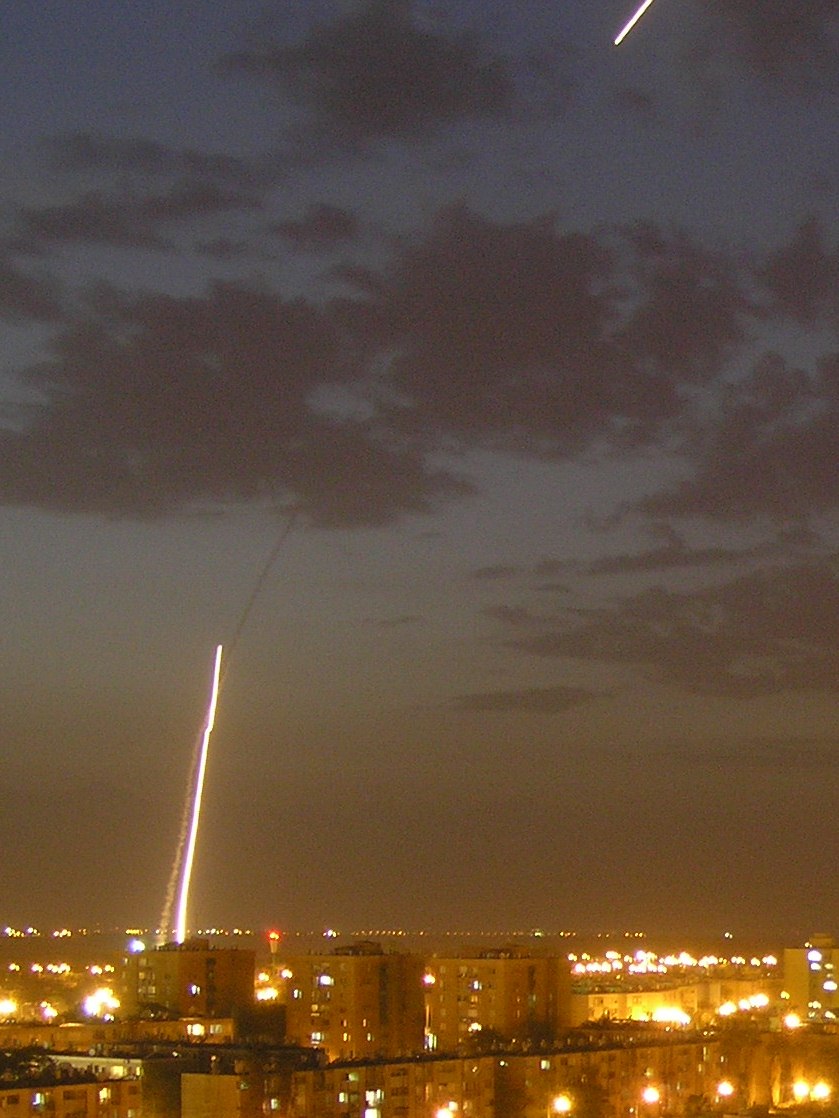
Iran has vowed to take revenge for these killings and the U.S. policy, as exemplified by Trump’s “not very serious headaches” remark, and Biden’s “take the win” advice, suggests that we accept their right to do so. Our only concern is that the revenge be limited so that it doesn’t give our Israeli allies an excuse to “escalate.”
There is a better way to conduct our Middle Eastern foreign policy.
That way begins with the recognition that Iran is the source of the violence and disorder. Without Iran, there would be no attacks on Israel by Hamas, Hezbollah, Islamic Jihad, or the Houthi rebels. There would be no smuggling of weapons into the West Bank to foment additional violence on that front as well. Without Iran, there would be no attacks on U.S. servicemen by the Iraqi Shia militias. All of these forces are armed, trained, and financed by Iran. Without Iranian support, they would be little more than gaggles of ragtag troublemakers.
Rather than focus on avoiding escalation, the U.S. should focus on escalation measures designed to impose costs on Iran, costs severe enough to force them to give up their strategy of gradually squeezing Israel.
One measure worth considering would be disrupting Iran’s oil export capacity. According to some estimates, 70% of the government’s revenue derives from oil exports. Unfortunately, the Biden administration has taken a soft approach to sanction enforcement, allowing the country to approach pre-2018 oil productions levels.
About 90 percent of Iran’s oil exports pass through the Strait of Hormuz. Blocking that choke point would disrupt that export flow. Iran would quickly run out of money to finance its proxies. Merely threatening to bomb Kharg Island, the country’s main terminal, would not only end Iran’s ability to finance its proxies, it would also terrify the theocrats running the country and possibly destabilize the regime.
Advocates of our anti-escalation policy might object that such actions would cause oil prices to skyrocket, wreaking havoc on the global economy. But this is unlikely, according to Jeffrey Sonnenfeld and Steven Tian. Writing in Yale Insights, they point out that Iranian oil is only a small fraction of Middle East oil production, about 12.5%, nearly 4 times smaller than the largest producer, Saudi Arabia. They also note that there is record “spare capacity” sitting on the sidelines, not only from the U.S., but also from Saudi Arabia.
Besides, Iran, through its Houthi proxies, is already disrupting oil traffic by attacking shipping in the Red Sea. Why not hoist the mullahs on their own petard?
There may be other, better measures worth considering. But continuing to adhere to a policy based primarily on avoiding escalation is the wrong course. It hasn’t worked in the past, and it is unlikely to work in the future. That approach implicitly acknowledges Iran’s privilege to cause mayhem in the region, and to retaliate when we or the Israelis take legitimate counter-measures.
When the U.S. gets tough on the international stage, it is often compared to John Wayne. In this case, a better cinematic model might be Sam Spade, Dashiell Hammett’s private detective. Spade is a cynic, plying his trade in a rough world. But in his own hard-bitten manner, he abides by a moral code. There is good and there is evil. In the Maltese Falcon, there is a scene when Joel Cairo physically threatens Brigid O’Shaughnessy. Spade intervenes by violently disarming Cairo. “That’s the second time you’ve laid hands on me,” growls the infuriated Cairo. Spade responds: “When you’re slapped, you’ll take it and like it.” Then he slaps him again, harder.
It is time to slap Iran.
 toputitbluntly.com
Excellent article, excellent advice.
The Iranians evidently have absorbed the lessons of game theory explained in Thomas Schelling’s Strategy of Conflict and Daniel Ellsberg’s “The Political Uses of Madness” (1959 Lowell Lecture) – which recent US Democratic administrations seem to have forgotten.
Only a madman has a chance in negotiation with a millenarian regime working through proxies who are eager to fight. A “rational” actor will always avoid escalation, repeatedly making concessions leading to an outcome right at their minimum tolerable threshold.
Destroying Iran’s production of 3% of the world oil supply will cause significant global economic dislocation – particularly for China, the biggest buyer. But that’s the point – a “rational” politician will shy away from this hit to their economy and political prospects – even thought it will be hugely damaging to their opponent.
I have nothing to add to the policy suggestions you make regarding Iran except a healthy skepicism that cutting off Iranian oil revenue will resolve the situation. If it’s just a question of money one wonders what motivates Iran. Is it simply zealous religious ideology or an irrational hatred of Israel. If Israel said okay you win we’re leaving I suspect the violence wouldn’t disappear but be redirected towards people we don’t identity with or don’t care about. If it didn’t effect the availability or price of oil too much we’d probably be happy to let the killing play itself out.
But back to the real world. One wonders if Israel has calculated how many new people who suffered collateral damage in the war against Hamas.will become sufficiently embittered to become new terrorist recruits. Does it care.
There does seem to seem to be a certain lack of care about collateral damage. I have little doubt that enough Hamas members can be killed to forestall and another Ovtober 7th like attack perhaps for a decade or more. But I suspect that there will have been created a sufficient number of embittered people to eventually refill the ranks. The U.S. with all it’s fire power and resources and manpower was not able to wipe out the Viet Cong.
And then there is the danger as we learned that our humanity gets lost No My Lai episode has yet happened or been publicized though the IDF tragically did kill some of the captured hostages who had escaped and tried to surrender to it. was it the result they were misidentified or a lack of care that they weren’t Hamas. One hopes this situation ends before anyone given
the collateral damage draws comparisons to German action at Lidice.
The simple truth it seems to me is we cannot do much to end the war without bringing something to the table, but don’t know what that would be either from the Hamas or Israeli end.
As I don’t have little to add to the policysuggestions.
“One measure worth considering would be disrupting Iran’s oil export capacity. According to some estimates, 70% of the government’s revenue derives from oil exports. “
It would be less expensive to buy everyone an electric car and put solar panels on every roof than it is to fund both sides of most conflicts by burning fossil fuels.