
In the summer of 2025, Israelis had cause for despair. Forty eight living and dead hostages languished in Gaza. In the wake of Israel’s military response to the largest massacre of Jews since the Holocaust, the International Criminal Court issued arrest warrants for Israel’s Prime Minister and for a former Defense Minister on charges of war crimes. Israeli tourists were advised by their government to avoid conspicuous signs of “Israeliness” while abroad and to refrain from posting their whereabouts on social media. Following the murders of two Jewish worshippers at a Manchester synagogue in the United Kingdom, Police in Birmingham, citing fears of further violence, announced that Israeli fans would be barred from attending a League Europa soccer match.
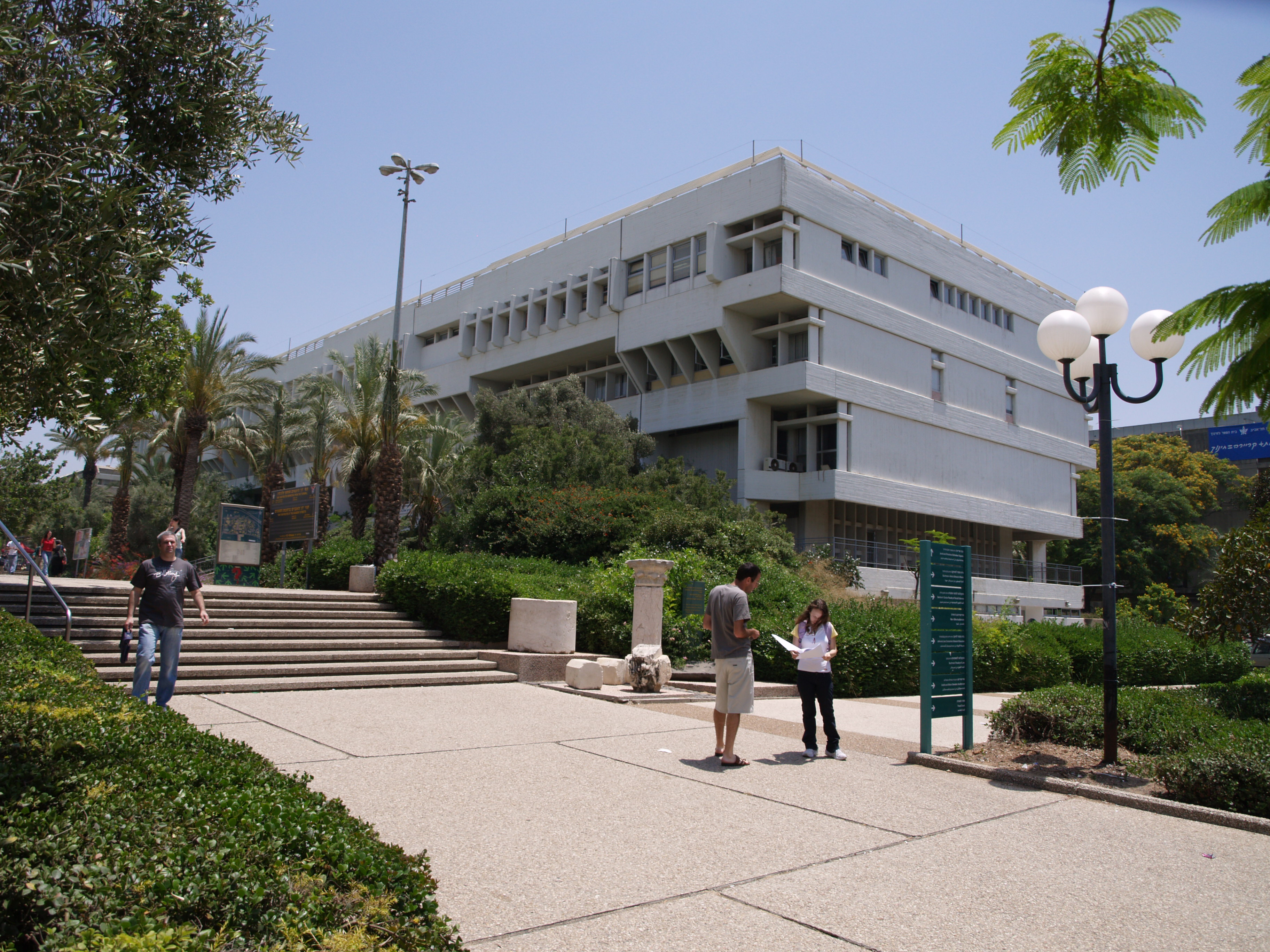
Amid the distress, and hardly noticed by the hostile world outside its borders, Israel’s Tel Aviv University announced that it was preparing to perform the world’s first human spinal cord implant.
Over 15 million people worldwide live with spinal cord injuries, preventing them from walking. Unlike other human tissues, spinal cord neurons cannot naturally regenerate. The implant procedure, if successful, will replace damaged spinal cord material with lab-grown material that will fuse with tissue above and below the injury, creating new pathways for nerve signals to travel.
This pioneering medical procedure would merit attention under any circumstances. But the fact that it emerged from a tiny country ostracized by much of the world, and under attack on many fronts by terrorist bands, makes it all the more extraordinary. This is especially so because the spinal cord advance is only one of a number of healthcare innovations emanating from Israel at the very time it endures international ostracism and confronts threats to its survival.
Many of these dramatic advances have arisen from its war with Hamas. As the New York Post reported last year:
From surgical robots that remove bullets and shrapnel to 3D-printed prosthetics tailored for rapid deployment, to a battlefield burn treatment developed from pineapples, [Israeli] technologies are redefining modern medicine and saving lives.
Though developed under wartime conditions, these innovations have civilian applications. For example, Magen David Adom, Israel’s emergency medical service, has developed a method for delivering whole blood transfusions on the battlefield, providing an astonishing 93% survival rate for soldiers suffering massive bleeding. The same technology could be used to save victims of gun violence and car accidents. Israel’s pineapple-based burn treatment has been approved by the FDA for use in the United States.
How is it that a nation facing global shunning continues to contribute to the world’s store of knowledge by generating breakthrough after breakthrough? Historically, nations facing such pressures and setbacks tend to turn inward and to stagnate. Consider the experiences of other nations in the same geographical neighborhood.
Science and philosophy flourished in the Islamic Golden Age, from about the mid-7th century to the mid-13th century, as Muslim rulers established large and thriving empires stretching from Spain to India. Then, in the face of external pressures and military defeats, a long dark period of intellectual deterioration set in. There was reluctance to allow in the printing press, that new European invention, for fear that it would destabilize the existing order. In 1493, as an influx of Jewish refugees expelled from Catholic Spain arrived, the Ottomans permitted Hebrew printing. But they banned Arabic printing until 1727, fostering a long period of intellectual decay. Even when printing presses were finally allowed, publishing output was severely restricted. From 1727 to 1838, the total output of all Ottoman presses was a paltry 142 books.
The Mughal Empire in India and the Safavid Empire in modern-day Iran were even more resistant to new ideas, favoring calligraphy over mass literacy. Printing presses were limited to publishing works designed to preserve clerical legitimacy.
The modern State of Israel has faced external pressures since the day of its founding, when five neighboring Arab armies invaded. Yet it has resisted the temptation to turn inward. Even in the darkest periods, it has never stagnated. Instead, it has a long record of technological and medical innovation, of which the spinal transplant announcement is only one recent example.
What is the source of this peculiarly Jewish hunger for science and progress?
There is a tendency to treat science and religion as antitheses. But in the case of the Jewish people, these two poles seem to be intertwined.
The Old Testament records that when Moses led the Israelites to the frontier of the Promised Land, he spoke to them for the last time. Moses had disobeyed God at the waters of Meribah, and the Old Testament God was not the type to tolerate insubordination. So Moses was allowed to see but not to enter the Promised Land. In his farewell address, Moses relayed a message from God to the people he had led across the desert for 40 years:
“I have set before thee life and death, the blessing and the curse; therefore, choose life, that thou mayest live.”
Contrary to fashionable current theories, the Jewish people are not recent colonists/settlers in Israel. Quite the opposite. This injunction to choose life over death was issued at the geographic and temporal threshold of a three thousand year bond between the Jewish people and the Land of Israel. The essence of this final message from God via Moses to the Israelites was that life in the nation they were about to enter would be based on choice. Life and death, blessing and curses, were not preordained.
This imposed a burden on the Jewish people. They could not be idle spectators of their history. They would have to be active participants. They would be responsible for the consequences of their choices.
Since the founding of the State of Israel, contemporary Israelites have been choosing life over death, which means they have been choosing hope over despair. That is why they persist in inventing, innovating, and progressing, no matter the contemporary odium their existence may generate.
And that is also why millions of people now confined to wheelchairs will one day soon walk.
 toputitbluntly.com