A BAD WEEK FOR FREEDOM OF SPEECH

Freedom of speech leads a precarious existence in the best of times, and these are not the best of times.  In many parts of the world, dissent from the majority views, particularly majority religious views, is a capital offense.  Most Americans consider themselves fortunate to live in a bastion of liberty where vigorous and robust speech is allowed and encouraged, even if the speech disturbs others.

Justice gaggedThat is why it was disheartening to see in one 48-hour period last week, the Ninth Circuit Court of Appeals, whose jurisdiction extends throughout the western United States and Alaska and Hawaii, deliver two stinging repudiations of freedom of speech. Continue reading

9 Comments

Filed under Law

LOVE AMONG THE HIGHBROW, AND THE LOW

What is the source of wisdom?

We are not born understanding thermodynamics or quantum mechanics, nor are we skilled innately to play Rachmaninoff’s Piano Concerto No. 3 or to perform spinal surgery.  The knowledge required for such undertakings comes from long years committed to education and training.

But what are the intellectual requirements for offering insights into the deepest human mysteries?  Do “highbrow” and “lowbrow” matter when the subject is the meaning of love?

I would argue not, and I would offer into evidence the testimony of two witnesses to support my case.

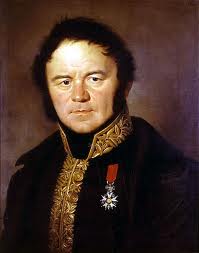
Marie-Henri Beyle, widely known by his pen name Stendhal, was a 19th-century French intellectual, polemicist, and novelist.  He authored De L’Amour (On Love), the classic work on the nature of love.

Image Continue reading

4 Comments

Filed under Culture

A PREFERRED STANDARD FOR LAWYERS

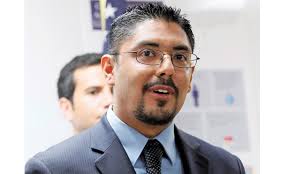
Last week’s unanimous decision of the California Supreme Court to admit to the State Bar Sergio Garcia, an alien residing in the United States unlawfully, was not a surprise.  The decision issued on January 2, 2014, the day after Assembly Bill No. 1024 became effective.  That statute, codified as Business and Professions Code section 6064(b), authorized the Court to admit as an attorney at law “an applicant who is not lawfully present in the United States [who] has fulfilled the requirements for admission to practice law . . . .”Image

Sergio Garcia cut a sympathetic figure, and was ideally suited for the role of a party in a test case.  He did not sneak across the border; rather, he was brought over by his parents when he was 17 months old.  His father eventually attained citizenship, and Garcia himself has been in line for 19 years, waiting for an immigrant visa to become available.  When it does, it will legalize his presence in the country and provide a basis to adjust his status to lawful permanent resident.  Meanwhile, Garcia has graduated high school, college, and law school.  He passed the California bar exam on his first attempt, then applied for admission to the Bar. The Court noted that the State Bar Committee’s investigation found “that Garcia is a well-respected, hard-working, tax-paying individual who has assisted many others and whose application is supported by many members of the community, by past teachers, and by those for whom he has worked.”  In his application, Garcia candidly indicated that he was not a U.S. citizen, and that his immigration status was “pending.”

In many ways, the case represented an internal affairs matter for the California legal profession.  The California Supreme Court has final say over who can and who cannot practice law in the state.  But while the Court’s ultimate conclusion was not surprising, what was surprising was that not a single lawyer sitting on the bench, nor a single lawyer appearing before it, took any notice of the fact that Garcia was receiving very different treatment than other enterprising businessmen.  No one commented on the uncomfortable fact that this proceeding, conducted by lawyers before lawyers, established a preferred status for lawyers under the immigration laws. Continue reading

5 Comments

Filed under Law

IT IS TIME TO RELEASE JONATHAN POLLARD

In November 1985, a short, bespectacled Navy civilian researcher, with a history of erratic behavior and drug use, was stopped by FBI agents on his way home from work.  Allowed to call his wife, he uttered the word “cactus.”  After the call, his wife removed a suitcase from their apartment and called some Israeli acquaintances.Pollard

The researcher was Jonathan Pollard.  The Israelis were his handlers.  The suitcase was filled with intelligence materials, which Pollard had surreptitiously removed from his office.  The materials represented a small portion of the paper pile Pollard had stolen and provided to the Israelis over the previous 18 months.  In total, the purloined documents could fill a space 10 feet by 6 feet by 6 feet – almost as large as the prison cell Pollard was destined to occupy for the next 28 years.

Continue reading

4 Comments

Filed under Law

WHERE ARE THE MANDELA’S?

Next week, three U.S. Presidents and 26 members of Congress will join over 60 world leaders, to attend the funeral of Nelson Mandela in Johannesburg.  This is a remarkable outpouring of global respect for a man who led a small country (South Africa’s population was 35 million when Mandela was elected to lead it) for a short time (Mandela served one four-year term as President, then retired).  It demonstrates the power of the moral life to inspire, a life which, in Mandela’s case, evidenced determination in the face of oppression, dignity in confinement, and forgiveness and reconciliation in victory.

Since his death, many commentators have cited Mandela as an exemplar of Thomas Carlyle’s theory of the “Great Man.”  Carlyle, a nineteenth century Scottish writer, maintained that human progress is powered by the actions of a few heroic figures.  “The history of the world is but the biography of great men,” he wrote.  Carlyle’s heroic view has always been controversial. His contemporary, Herbert Spencer, deemed it childish and primitive.  Spencer saw history as the product of larger, impersonal social and economic forces.  These forces made the so-called Great Men more than the Great Men made history.  “Before he can remake his society,” Spencer wrote of Carlyle’s hero, “his society must make him.”MANDELA

The social system into which Mandela was born was a retrograde and odious system of racial separation.  He spent most of his life fighting it, and when he had won, he forgave his oppressors and tried to work with them in building a new social system.  It is hard to find precedents for the magnanimous course he followed after release from his 27-year imprisonment in 1990.  Perhaps Abraham Lincoln, with his reconciliation plans for the defeated Confederacy, would have furnished an example, had he lived.


Continue reading

1 Comment

Filed under Culture

ZOMBIES: ARE THEY GOOD FOR THE JEWS?

Readers of a certain vintage raised in Jewish homes will recognize the question posed by the title as the ultimate arbiter on issues of the day.  Is Sammy Davis Jr. good for the Jews?  Absolutely, I’m kvelling.  Is Eisenhower good for the Jews?  Not so much.  Even today, the expression survives.  The Wall Street Journal recently published a column assuring its readers that the new Pope Francis would be “good for the Jews.”

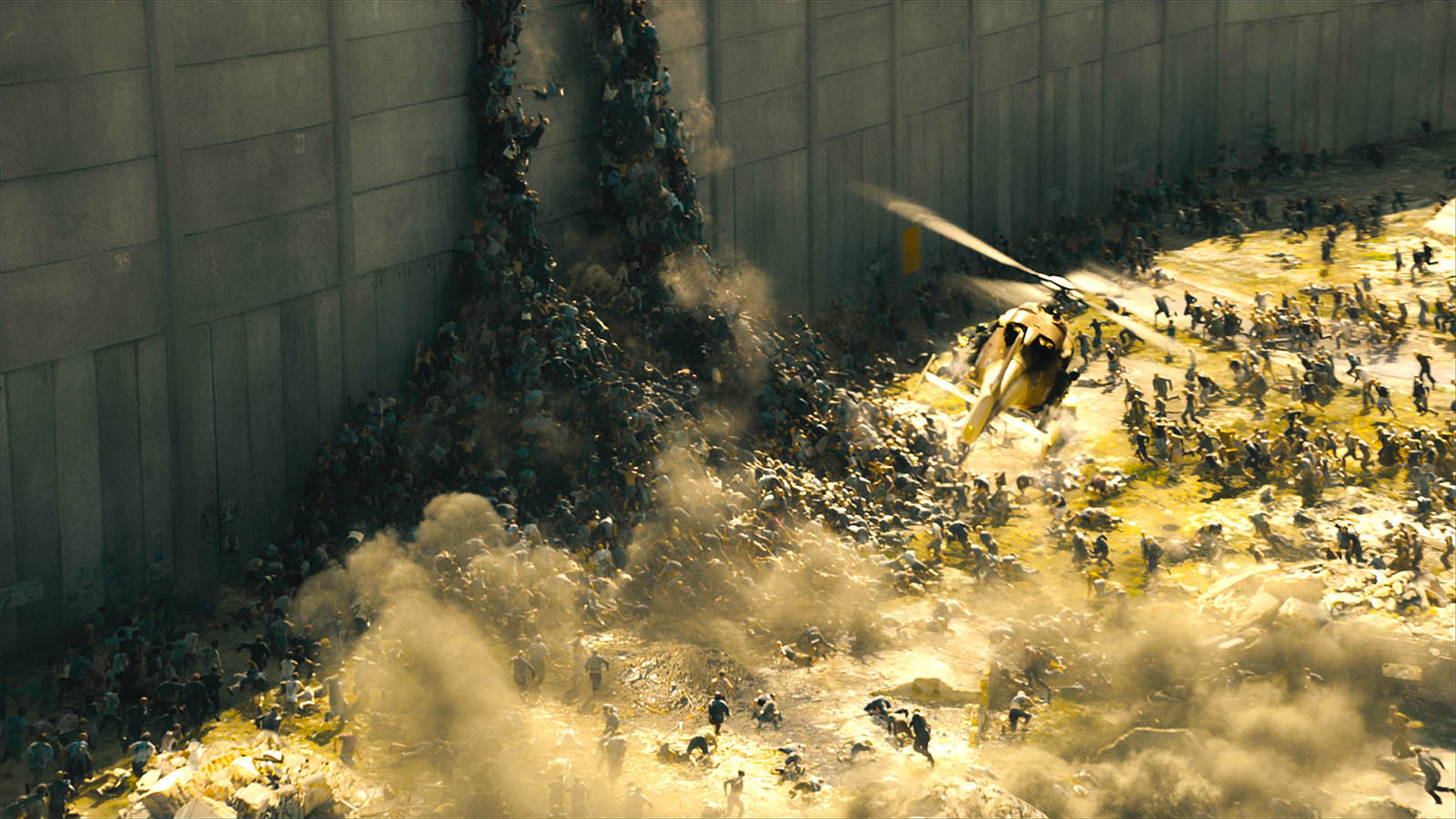
Now Brad Pitt’s summer movie spectacular, World War Z, has the world wondering: are zombies good for the Jews?

"Next year in Jerusalem!"  zombies pray.

“Next year in Jerusalem!” zombies pray.

Continue reading

5 Comments

Filed under Culture

MONEY: The Good, the Bad, and the Ugly

money.image“So you think that money is the root of all evil?” said Francisco d’Anconia. “Have you ever asked what is the root of money?”

Ayn Rand, Atlas Shrugged

Life is not a Randian novel, populated by characters embodying absolute good or absolute evil.  Life is more complicated than that.  Real life actors strut upon the stage wearing hues of gray instead of black or white.  But that doesn’t mean that life can’t teach moral lessons.

Last month, real life rather than fictional characters taught some important lessons about the nature of money. Continue reading

3 Comments

Filed under Culture, Politics

BOSTON’S TROUBLING MESSAGE

Boston emerged from the hideous din of the Marathon bombing as America’s Hero City.  “Boston Strong” has become a favored slogan, while sportswear proclaiming “Boston Strong – Wrong City to Mess With” sells briskly.  Page one of the Chicago Tribune sports section featured the logos of all the Boston major-league teams on a black background, with the words: “We Are Chicago Red Sox, Chicago Celtics, Chicago Bruins, Chicago Patriots, Chicago Revolution.”  In the Bronx, Yankees fans – Yankee fans! – sang “Sweet Caroline”, the anthem of the Red Sox, during the third inning of their game against the Diamondbacks.

Boston Strong

The FCC imposed heavy fines on NBC and Fox when Bono and Nicole Richie used the F-word on live television.  But after David Ortiz told the fans at Fenway Park, and the millions more watching on television, “This is our fucking city, and nobody’s going to dictate our freedom” – the FCC Chairman tweeted “David Ortiz spoke from the heart at today’s Red Sox game. I stand with Big Papi and the people of Boston.”

The City of Boston deserves the nation’s respect.  Its people weathered the crisis with courage and resilience.  Its law enforcement personnel performed their duties with brave professionalism.  There was a wonderful unity.  For those of us who grew up in Boston during the anti-war 60s and 70s, the spectacle of college students thronging the streets to wave American flags and cheer policemen and soldiers was strangely marvelous.

Yes, Boston deserves its status as the Hero City.  But in our long war with terrorism —  a war in which the Marathon bombing was merely one battle in a long series, past and future — should Boston stand as a Model City?

Boston-Bridge-570x427

To answer that question, attention must be paid to the goals and motives of terrorists.  As this article is written, available evidence suggests that Tamerlan and Dzhokhar Tsarnaeve acted on their own.  But all terrorists, whether part of international networks executing carefully planned attacks – as in the 9/11 or London Underground  bombings — or lone wolves – as was the case with Fort Hood army psychiatrist Nidal Malik Hasan — share certain characteristics.

Terrorists are not out to “win.”  At least not in the conventional sense.  They do not expect the cities they attack to unfurl a white flag and surrender.  They are not intent upon conquering and occupying territory.

Terrorists do not expect to escape.  Suicide bombers determine their fates themselves.  But even those who try to get away, as the Tsarnaev brothers did, understand that they will be eventually caught or killed.  Long before the bombing, Dzhokhar Tsarnaeve, the younger brother, tweeted: “I will die young.”

Then what do terrorists want?

They want to be noticed.  They want the world to acknowledge their relevance.  They want the world to acknowledge their power.  They want to stop the world in its tracks, and command its attention.

Now consider what they achieved in Boston.

They killed four innocents, and managed to maim or injure almost two hundred others.  But the shockwaves of their malevolence extended far beyond those crimes.

In the wake of the bombing, Boston and its surrounding communities went into a defensive crouch, as nearly one million people “sheltered in place.”  Boylston Street, the heart of the business district, became a ghost town and remained so for nine days.  At the height of the crisis, there was no public transit, no taxi service, no Amtrak service.  The public schools and dozens of colleges shut down.  City employees were told not to report to work.  Courthouses closed, and jurors were sent home, as the justice system ground to a halt.  The Boston Red Sox and the Boston Bruins postponed their games.

Now this is one way to deal with terrorism, and it carries with it certain advantages.  It enhances public safety.  No one knew whether other explosive devices remained in Boston’s public areas.  Citizens locked inside their homes are less exposed to danger.  And streets bare of vehicular traffic make it much easier for law enforcement to track and pursue terrorists.

But other cities have dealt with other crises differently.  On the morning of July 7, 2005, 52 civilians were killed and over 700 injured as terrorists detonated three bombs in the London Underground, and a fourth on a double-decker bus.  By 4 pm that same day, bus service had resumed.  Subway service, except in the damaged stations, resumed the next morning.

Israel has withstood scores of suicide bombings, and tens of thousands of rocket and mortar attacks on its civilian centers.  It has developed a strict protocol for handling crime scenes.  Victims are evacuated, body parts respectfully removed.  Then clean-up crews arrive to remove the wreckage and repair the walls and the glass.  Within hours the affected facility – a bus station, a restaurant, a market – is reopened and back in business.

A quick return to business as usual is not callousness.  Israeli cities are dotted with plaques bearing the names of the victims of terrorism.  They are not forgotten.

But Israelis, Londoners, and others realize that the goal of terrorism is to inculcate a sense of vulnerability and helplessness.  Therefore, one of the most effective anti-terrorist tactics is the prompt return to normality.  Showing up at work the next day, or boarding a bus, or patronizing a pizza shop – such mundane actions by a resolute citizenry demonstrate the failure of terrorism to terrorize.  These actions defeat terrorism by illustrating its futility.

Boston reacted very differently, and that difference may send a regrettable message to the thousands of other Tsarnaeves lurking in other cities, leading gray inconsequential lives.  Many would-be terrorists have now seen how easy it is to paralyze a great city.  They have seen how simple it is to command attention.

Is Boston Strong?  Absolutely.

Was Boston wise?  Time will tell.

3 Comments

Filed under Culture, Politics

Margaret Thatcher and Her Sisters

Thatcher.and.Sisters

Today, the Baroness Thatcher (after her retirement from politics, she was given a peerage) was laid to rest.  In death as in life, Margaret Thatcher poses problems for feminists.  As the first and the only female Prime Minister of Great Britain, she shattered a ceiling whose hardness resembled granite more than glass.  Yet once in office, she did not fit the role expected of women pioneers.  She did not merely part company with contemporary feminists.  She disdained and ridiculed them.

The feminists hate me, don’t they?” she asked in a 1982 interview, three years into her tenure as Prime Minister.  “And I don’t blame them. For I hate feminism. It is poison.”

“I owe nothing to women’s lib,” she announced, and many feminists gladly returned the compliment.  They have accused her of pulling up the drawbridge behind her once she had gained entry into the corridors of power.   They have noted that in her eleven years at Ten Downing Street, she appointed only one woman cabinet member, and that one was to a rather unimportant position in the House of Lords.   Alexandra Petri, a Washington Post blogger, has recorded Thatcher’s place in feminist history.  Or rather, her lack of place.

Look at your average list of Female Trailblazers and Great Women in History and Women Leaders — Ashley Judd’s there, Chelsea Clinton, even Princess Diana — but there’s a giant hole shaped like the Iron Lady. The Guardian’s list of 10 Best Female Pioneers includes Coco Chanel and Kathryn Bigelow, but Margaret Thatcher? Go fish.

The Guardian’s list of the Ten Best Female Pioneers includes Eva Peron, but Thatcher’s nowhere to be seen. She does make About.com’s list of Top 100 Women of History, but then again, so does Rosie the Riveter, who is literally a fictional character.

Yet Thatcher’s position on feminism was more nuanced than her critics, and Thatcher’s own dismissive comments, might suggest. Continue reading

6 Comments

Filed under Foreign Policy, Politics

Usama bin Laden’s Trademark Concerns

One year after the killing of Usama bin Laden, the U.S. Government has declassified some of the materials seized during the raid on his compound.  The media had earlier reported that the terrorist leader was concerned that his organization’s brand had become tarnished by its association with attacks on noncombatants.  CNN gave this account last April:

Bin Laden well understood that al Qaeda’s brand name was in deep trouble, in particular, because the group and its affiliates had killed so many civilians.  ….  So badly tarnished had the al Qaeda brand become that bin Laden noodled with changing the name of his group. In an internal memo, bin Laden pointed out that “[President] Obama [says] that our war is not on Islam or the Muslim people, but rather our war is on the al Qaeda organization. So if the word al Qaeda was derived from or had strong ties to the word ‘Islam’ or ‘Muslims,’ or if it had the name ‘Islamic party’ it would be difficult for Obama to say that.”usama.trademark

A recently declassified transcript of an audiotape seized during the raid documents bin Laden’s trademark concerns.  The following transcript was translated by the Defense Language Institute Foreign Language Center, located in Monterey, California.  Continue reading

Leave a comment

Filed under Foreign Policy, Law