
It is tempting to overuse the “Munich analogy” but something about the way Harvard University proudly announced the negotiated settlement of the Harvard Yard encampment problem brought to mind the image of Neville Chamberlain waving a piece of paper and proclaiming “Peace in our time.” For his role as a peacemaker, interim President Alan Garber was immediately lauded in progressive quarters for having achieved a “peaceful outcome … that had eluded some other colleges and universities where officials have resorted to calling the police to clear demonstrators.”
But calling the police to deal with unlawful conduct is proper. That is why we have police. What is not proper is capitulation. Even worse is ignominious capitulation. That is what just happened on the Charles River.
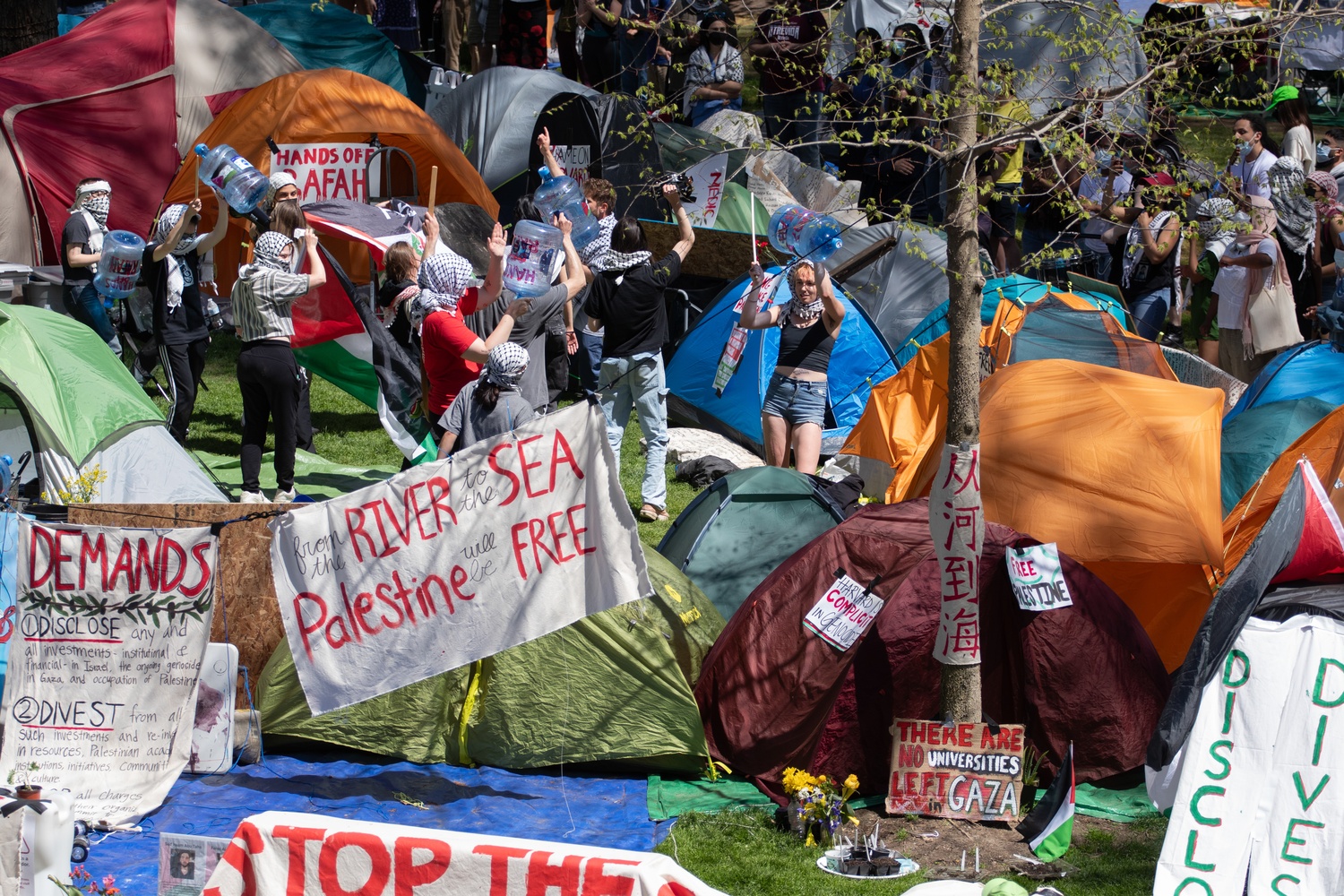
Three weeks ago, protesters styling themselves “Harvard Out Of Palestine” (HOOP) set up an encampment in Harvard Yard to protest Harvard’s supposed connection to the war in Gaza. No one questions their right to protest. But trespassing is another matter. After tolerating the tent city for 12 days, President Garber issued a statement that declared, in essence, “Enough.”
He noted that the encampment was causing numerous disruptions to the University. Exams had to be moved to other locations. Safety concerns over students sleeping outdoors required limiting access to the Yard. Students complained that the campers’ noise made it impossible for them to sleep, and the congestion made it impossible to move freely about the campus. President Garber cited reports that non-protesting students were being “intimidated and harassed,” and that passers-by were being “confronted, surveilled, and followed.”
President Garber concluded his statement with a stern warning:
I write today with this simple message: The continuation of the encampment presents a significant risk to the educational environment of the University. Those who participate in or perpetuate its continuation will be referred for involuntary leave from their Schools. Among other implications, students placed on involuntary leave may not be able to sit for exams, may not continue to reside in Harvard housing, and must cease to be present on campus until reinstated. (emphasis in original)
That was then.

 toputitbluntly.com