
We may never know exactly what happened at the Chi Pi fraternity on the Cornell campus on an October night in 2024. Memories fade and become selective over time. The participants were in varied states of intoxication.
But whatever uncertainties linger, and regardless of whatever new evidence emerges, one fact remains salient. Each young man at the scene had an opportunity to behave honorably. Each had a chance to act in a way that would have made his parents proud. To enlist some quaint language: Each young man had an opportunity to behave like a gentleman.
None did. Instead, each young man behaved abysmally.

Legal scholars have observed that law and morality are concentric circles with the same center but different radii. That observation is germane here.
In the pending criminal proceeding, the court may rule that the young men’s behavior did not violate the law. New York sexual assault law is convoluted, especially in situations where the victim has become severely impaired by voluntarily consuming alcohol or drugs. But even if the court ultimately finds no violation of the law, there was assuredly a violation of common decency. The text messages exchanged among the fraternity brothers — “free pussy upstairs,” “like you can walk in and whip it out,” and “is the shop still open?” – display a shameful moral depravity.
College is a time of experimentation, and freedom often leads to excess. Young men are not expected to behave like Puritans, and fraternities are not expected to serve as cities on a hill. But one does expect young men to refrain from exploiting an obviously helpless young woman – regardless of how she came to be in that state.
In a different age and a different culture, masculine forbearance had a name. It was called chivalry. The name comes from the French word for knight, “chevalier.” It was a code whose rules date back to The Song of Roland, the epic poem of France. It enjoined knights to fear God, serve their liege lord, live by honor and for glory, protect the weak, and respect the honor of women.
Chivalry, in its original form, was not a model code of behavior. It extended knightly protection only to noble ladies, not to peasants. But as it evolved, it grew into a set of customs that enjoined all men, not just knights, to respect all women, not just ladies of noble birth. It manifested itself in common, everyday rituals, such as opening doors, walking on the streetside of the sidewalk, and paying for dinner. These may strike us as quaint or silly today. But they created an environment that prohibited rudeness and forbade preying on the weak.
There were no signs of chivalric life that night at the Chi Pi fraternity. But if chivalry is dead, who killed it? The literature of modern feminism provides a clue.
Ms. Magazine published an influential essay entitled “Tools of the Patriarchy: Should Chivalry Be Dead?” The authors quickly answer their own question: “Simply put: Yes.”
Writing in the everyday feminism online magazine, the author goes farther and declares: “Chivalry needs to die. A horrible, painful, loud and dramatic death…. Something where people say: what on earth was that?”
Why this feminist condemnation of chivalry? The main reason given is that chivalry is “based on the idea that women are inherently weaker and require a man’s aid or protection in order to function day-to-day.” The authors of the Ms. Magazine essay assure their readers that they are not calling for men to stop buying women dinner or opening doors for them. They are merely saying that men “should be thrilled if a woman wants to do these things for [them] too.”
They conclude: “Equality, as in all things, is key here.”
Really? In all things?
As it happens, men and women are not equal in all things. They are, or ought to be, equal in political, legal, economic, and intellectual matters. But they are not equal in physical characteristics. Pointing this out is not a matter of bigotry. It is a matter of biology.
When Jane Doe entered the fraternity, she was stepping onto an unequal playing field. She and the accused men were all drinking and taking ketamine. But there was no equality in the effects.
An average young woman will reach a standard level of legal intoxication (a Blood Alcohol Concentration of 0.08%) after three standard drinks. An average young man requires 33% more alcohol to reach that level of intoxication. The difference is due to the biological fact that men and women vary in water content, body fat, and enzyme levels, all of which affect the level of alcohol required to reach intoxication.
Similarly, ketamine affects men and women differently. In laboratory tests, females are consistently found to be more sensitive to ketamine both in dosage and magnitude of the behavioral response.
These physical differences and biological facts explain why even today there is a need for a code whose origins trace back to medieval times.
In the everyday feminism magazine article, the author declares: “The old idea of sending ‘women and children first’ to safety is absurd and insulting. A sinking cruise ship doesn’t target women any more than it does Turks or redheads or musicians.” That’s not how the men on the Titanic saw it. In an egregious act of sexism, most men chose to give up their seats on the lifeboats to women and children. That explains why adult males had roughly a 17% to 20% chance to survive, while adult females had roughly a 74% to 77% chance. But that was a different time when a different moral code prevailed.
Events may have turned out very differently had that code shaped manners at Cornell.
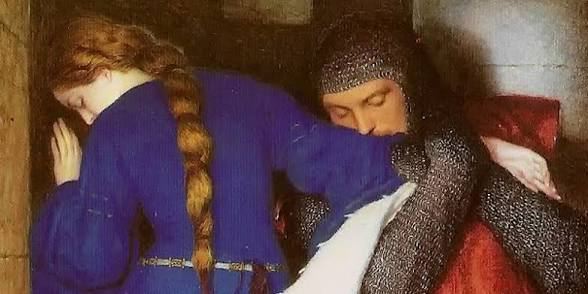
Instead of the actual sordid events of that night, imagine an old fashioned, hopelessly regressive fraternity member, backward enough to still adhere to chivalric principles, even if doing so subjects him to scorn from his progressive male and female classmates. Picture him seeing a helpless young lady. Instead of “whipping it out,” and availing himself of “free pussy,” he sees a vulnerable female in danger. She is non-responsive. She cannot walk or even stand. He does not pause to ascertain how she fell into this condition. All he sees is a woman in distress. So he abides by a code taught to him by his elders and demonstrated by his role models. He lifts her in his arms and carries her out of the room. Other fraternity members may protest his actions. They may even try to block his way. One can imagine him charging and dispersing them, like a knight on horseback, as he carries Jane Doe out of the house, away to safety.
An absurd fantasy based on an obsolete code of conduct? Maybe. But if the code is dead or moribund, perhaps it is time to resurrect it.

