Category Archives: Law

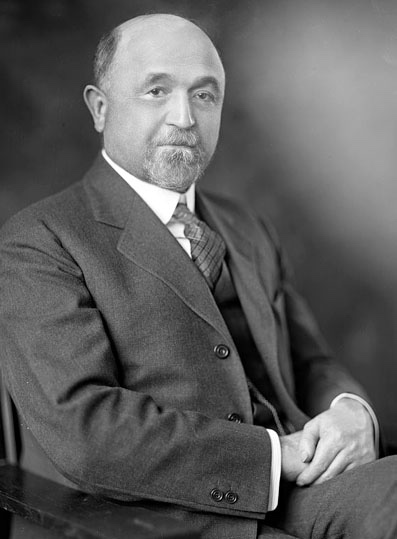
WHO THE HELL WAS HUMPHREY?

Whether you are a lawyer or just interested in the law, chances are you have heard of Humphrey’s Executor. It seems that the case is always mentioned whenever pundits debate President Trump’s power to fire members of federal agencies.

Supporters of Rebecca Kelly Slaughter, formerly a member of the Federal Trade Commission, cite the Humphrey’s Executor decision to contest Trump’s right to terminate her. In that 1935 case, the Supreme Court ruled 9-0 that an FTC commissioner can be fired only “for cause,” which under the FTC Act is defined as “inefficiency, neglect of duty, or malfeasance.” Disagreement over policy, according to the Court’s holding, is not a sufficient basis for termination.

Trump’s supporters contend that the FTC, like all federal agencies, is part of the executive branch of the federal government. All members of that agency must be answerable to the President since he is the head of the executive branch. Otherwise, the federal agencies would constitute an unconstitutional fourth branch of government. They urge the Supreme Court to overrule Humphrey’s Executor.

But just who was this fellow Humphrey?

Continue reading

Leave a comment

Filed under Law

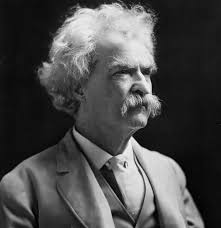
THE COPYRIGHT ADVENTURES OF MARK TWAIN

When Samuel Clemens, better known by his pen name Mark Twain, died in 1910, the New York Times deemed him the greatest humorist and satirist in the English-speaking world.  William Faulkner later went beyond that accolade, and called him “the father of American literature.”

There is another lesser known area in which superlatives are due. He was the most fervid and imaginative champion of copyright law this country has ever produced.

In his magisterial  biography, Ron Chernow characterizes Twain’s attitude toward copyright law as “militant.” Chernow likes the adjective so much that he uses it three times.  And it is proper to do so. For while all writers wish to maximize their copyright protection, none have been as combative as Twain in attempting to stretch the boundaries of that legal doctrine.

For most of his life, his attempts failed. But he never gave up. In the end, he succeeded.

Continue reading

2 Comments

Filed under Law

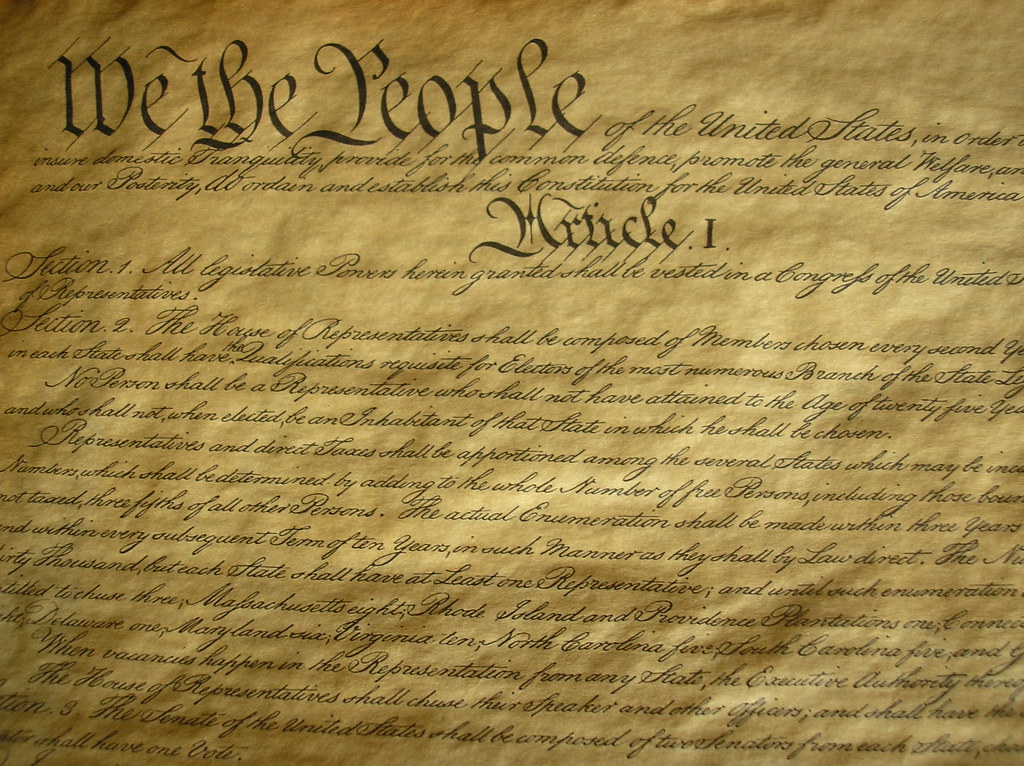
NO, WE ARE NOT IN A CONSTITUTIONAL CRISIS

Is the nation facing a constitutional crisis?

“Sure are!” say any number of pundits. According to Adam Liptak of the New York Times, the question is not whether such a crisis exists, but rather how that crisis “will transform the nation.” Presumably, badly.  And to his colleague Jamelle Bouie, the actions of President Trump are not just “unconstitutional,” they are “anti-constitutional,” because they “reject the basic premise of constitutionalism.” In other words, asking whether Trump’s actions are merely unconstitutional should trigger the response: “We should only be so lucky.”

The truth is less dramatic. We are not facing a constitutional “crisis.” Rather, we are seeing exactly the kind of inter-branch conflict our Constitution was designed to foster.

The level of discourse about a possible constitutional crisis would benefit if those wishing to opine were first required to read the Constitution. Not just the first ten amendments, commonly known as the Bill of Rights. The actual original un-amended document ratified in 1788.

Continue reading

Leave a comment

Filed under Law

A TALE OF TWO CITY KILLINGS

The nation’s attention is currently focused on two killings that occurred blocks apart in the same city.  The different national reactions to these two New York events may seem to reflect the political fault lines in our country. But they expose something deeper than politics. They expose different societal attitudes toward the enduring conflict between order and chaos.

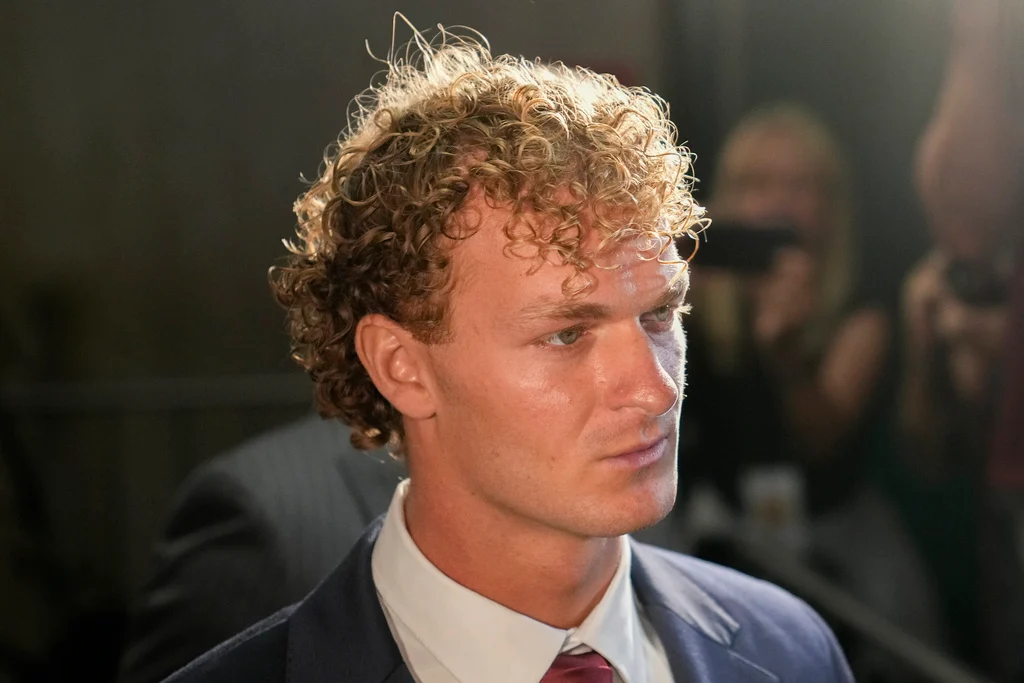
The first killing occurred on May 1, 2023, on an F-train near the Broadway-Lafayette subway station. Daniel Penny, an ex-Marine, grabbed Jordan Neely in a chokehold from behind, and held him for six minutes. Neely a homeless man with a record of 42 prior arrests, including 4 for alleged assault, had been threatening passengers, announcing “someone’s going to die today” and telling them that he did not care if he was the one.  At the time of his death, there was an outstanding warrant for his arrest, arising from his assault on a 67-year old woman on a subway car. In that incident, the victim sustained a broken nose, a fractured orbital bone, and bruising and swelling of the back of her head.

The second killing occurred on December 4, 2024, at the Midtown Manhattan Hilton Hotel, about an hour’s walk from the first incident.  Brian Thompson, the CEO of United Healthcare, was on his way to an investor conference when he was fatally shot by a masked assailant. The as yet unidentified killer fled the scene on a bicycle, and is now believed to have left the City. 

Penny is currently on trial for the death of Neely. The death of Thompson is under investigation.   

Continue reading

1 Comment

Filed under Law, Politics

GOOGLE’S GEMINI COLLIDES WITH COPYRIGHT

Google’s disastrous launch of its Gemini AI program has been viewed as yet another skirmish in the long-running culture wars. Certainly, Gemini reflects the progressive biases of its Silicon Valley creators. But the debacle offers more than a lesson on the dangers of “woke-ism.” It also provides insight on the collision between AI and copyright, a subject this blog has examined before.

Before turning to the copyright issue, let’s explore what went wrong with the launch.

Google designed Gemini to compete with OpenAI’s ChatGPT, and other AI products.  Unlike its rivals, which generally deal with one type of prompt, Google designed Gemini to be “multimodal,” meaning that it could accept inputs in many different media, including text, images, audio, and video.

The Company boasted that Gemini outperformed its rival AI models across dozens of benchmarks including reading comprehension, mathematical ability, and multistep reasoning skills. But the fanfare surrounding its launch was quickly replaced by ridicule, as users tried it and discovered a number of glaring quirks.

A search for images of Nazi soldiers generated an absurd collage of racial inclusiveness.

(Gemini images republished by The Verge.)

Searches for pictures of Founding Fathers, Vikings, and popes –categories exclusively white — also generated multiracial images. But paradoxically, with no whites.

(Gemini images republished by Reason Magazine.)

In brief, Gemini produced results that looked like DEI on steroids.

Continue reading

Leave a comment

Filed under Culture, Law

TRUMP SHOULD STAY ON THE BALLOT

Next month, the U.S. Supreme Court will hear argument on whether or not Donald Trump is qualified to appear on the ballot in Colorado. Disqualification challenges have become a weapon used by Trump’s opponents to stop him from regaining power. Outside Colorado, a disqualification challenge succeeded in Maine. Challenges in Michigan, Minnesota, and California have failed. But depending on the Court’s ruling, there could be more.

The Supreme Court acted sensibly in accepting the Colorado case on an expedited basis. It would be chaotic to have a presidential election decided by different states following different disqualification criteria. It would also be dangerous to our democratic system.

The Colorado case will focus national attention on Section 3 of the 14th Amendment, which reads:

No person shall be a Senator or Representative in Congress, or elector of President and Vice-President, or hold any office, civil or military, under the United States, or under any State, who, having previously taken an oath, as a member of Congress, or as an officer of the United States, or as a member of any State legislature, or as an executive or judicial officer of any State, to support the Constitution of the United States, shall have engaged in insurrection or rebellion against the same, or given aid or comfort to the enemies thereof. But Congress may by a vote of two-thirds of each House, remove such disability.

The Court will confront a number of issues:

  Does this disqualification language apply to the President? Note that it specifically mentions “Senator or Representative in Congress, or elector of President and Vice-President.” It also refers broadly to “any office, civil or military, under the United States, or under any State.” But it does not specifically mention the presidency itself.

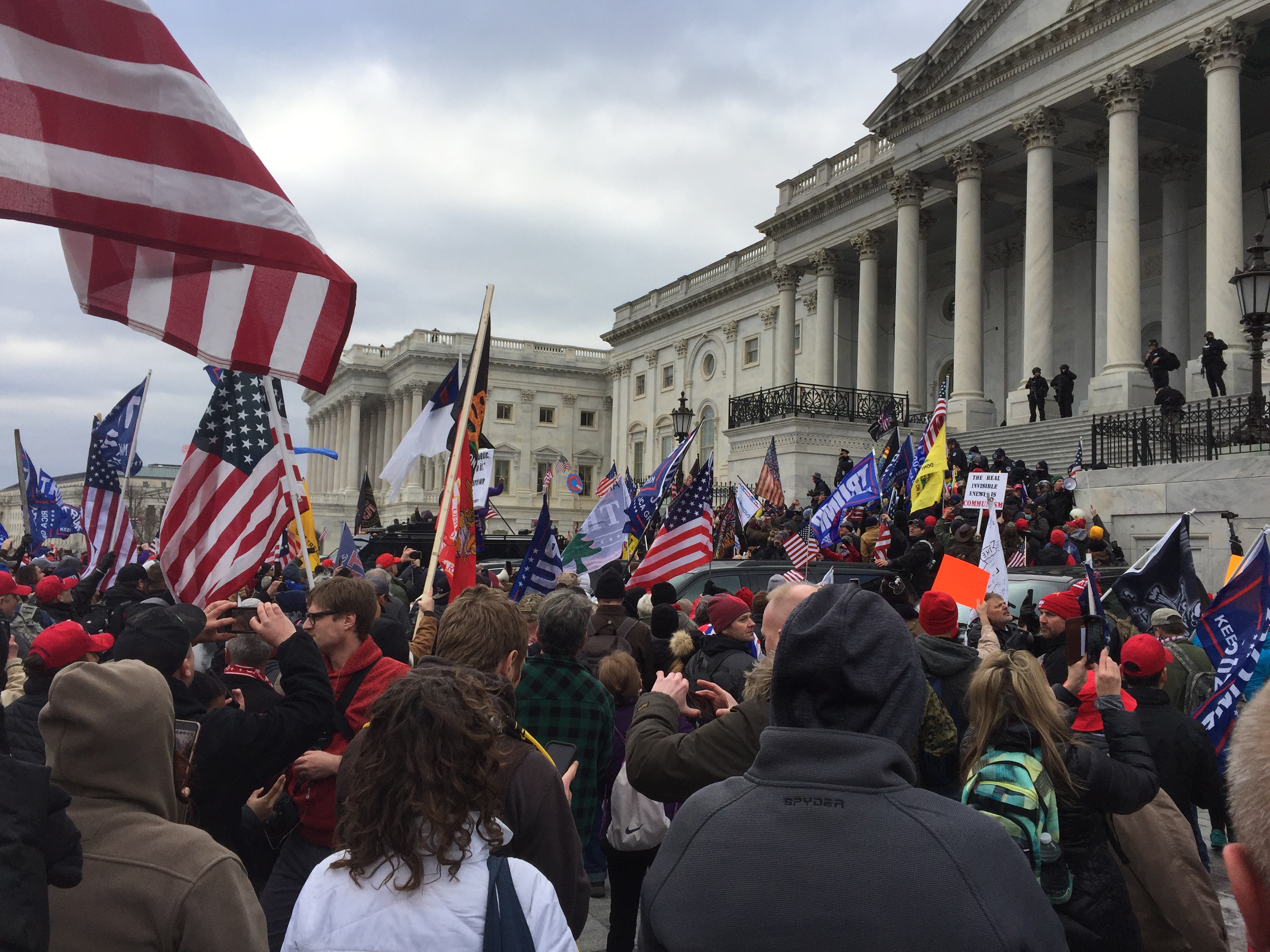
  What constitutes an “insurrection”? Is a violent riot, like the one that occurred on January 6, sufficient? Or must there be an armed and organized attempt to overthrow the government, like the Bolsheviks storming the Winter Palace or the Confederates bombarding Fort Sumter?

  What does it mean to have “engaged” in insurrection? Is cheering from the sidelines sufficient? Or must there be personal participation in the activity?

All of these issues present interesting, if arcane, legal issues, the kind lawyers and jurists love delving into and debating. But if it chooses, the Supreme Court can reject Colorado’s attempt to keep Trump off the ballot for two simple and straightforward reasons.

First, Colorado (and Maine) failed to provide Trump with anything even approaching the kind of due process to which he was entitled in this important matter. Second, the question of whether Trump should be disqualified for having engaged in insurrection has already been decided in a trial before the U.S. Senate presided over by the Chief Justice. And he was acquitted. Neither Colorado, nor Maine, nor any state, has the right to retry him.

Continue reading

6 Comments

Filed under Law, Politics

BIASED BUT UNBOWED AT HARVARD

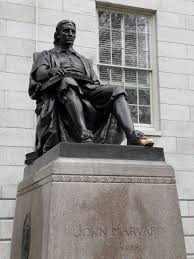
No sooner had the Supreme Court released its decision in Students for Fair Admissions v. Harvard, than Harvard, the losing party, released a statement of its own by President-elect Claudine Gay. The statement was apparently prepared in advance, in anticipation of a judicial defeat. Gay, while expressing Harvard’s intention to comply with the Court’s decision, struck a pose of defiance: “We will comply with the Court’s decision, but it will not change our values.”

She did not say what those values were.

She added that the decision “has … strengthened our resolve to continue opening doors.”

She did not mention the fact in opening its doors to some, Harvard has been closing them to others; namely Asian Americans.

Harvard’s post-decision statement represented a missed opportunity. This was the moment for Harvard to own up to its discrimination against Asian Americans and to apologize.

An apology would not have required Harvard to repudiate its admissions policies, far less to admit guilt. Harvard could have still insisted that its actions, in its view, were legal and moral, and that the law would ultimately vindicate it. It could have asserted that any harm done to Asian Americans was the unfortunate but unavoidable cost of remedying greater harms.

An apology would merely have required Harvard to acknowledge that in addressing what it sees as a long history of oppression of blacks by whites, Harvard has been hampering and harming Asian Americans.

Continue reading

3 Comments

Filed under Law

WHEN WORLDS COLLIDE: AI MEETS COPYRIGHT

Copyright and Artificial Intelligence (AI) may be on a collision course. The capacity to comb through vast troves of data to generate arguably novel stories, poems, artwork, music, and other expressive works, gives rise to an array of tough legal issues.

Are the generated works truly original and therefore subject to copyright? If so, who owns the copyright? And what scope of protection does such a copyright confer?

Answering these questions poses formidable challenges. But it’s important to put this in perspective. We’ve been here before. Copyright and technology have collided again and again over the ages. In fact, there were collisions before there were copyright statutes. In each case, solutions were found, and copyright emerged intact or even stronger.

Continue reading

4 Comments

Filed under Law

AVERTING FUTURE GRINER DEALS

No sooner had WNBA star Brittney Griner and convicted arms dealer Viktor Bout crossed paths on the tarmac at the Abu Dhabi airport than the debate began in this country: Was the United States fleeced when it gave up Bout for Griner, while leaving former Marine Paul Whalen behind?

The arguments on both sides have been fervid, often verging on the vituperative. Critics say Griner was not worth the trade. They have referenced the time she refused to come out of the locker room for the national anthem; “Brittney Griner Hates America” is trending. On the other side, supporters of the deal have blamed “pay inequity” for Griner’s arrest, arguing that sexism compels WNBA athletes to play in hostile countries like Russia to earn extra income. Some have also mentioned that Whalen is no angel; he received a “bad conduct” discharge from the Marines, due to larceny.

All this sniping misses the point. The swap’s significance transcends Griner, Bout, and Whalen. It even transcends Russia. The trade is a symptom of a new and dangerous form of warfare being waged against this country by several foreign governments: seizing and holding American citizens to humiliate the United States and to advance these nations’ foreign policy objectives.

Continue reading

1 Comment

Filed under Foreign Policy, Law

A CALIFORNIA COURT’S DECISION DEFINING BUMBLE BEES AS “FISH” IS A LOSS — FOR CALIFORNIA COURTS

Last week, the California Supreme Court decided to let stand a lower appellate court decision holding that bumble bees are “fish” under the state Endangered Species Act. Chief Justice Tani Cantil-Sakauye, anticipated (quite correctly!) that her ruling would puzzle the public. She wrote:

…[O]ur decision not to order review will be misconstrued by some as an affirmative determination by this court that under the law, bumble bees are fish. A better-informed observer might ask: How can the court pass up this opportunity to review the Court of Appeal’s interpretation of the Fish and Game Code, which seems so contrary to common knowledge that bumble bees are not a type of fish? Doesn’t this clear disconnect necessarily amount to “an important question of law” … warranting this court’s intervention, because the Legislature could not possibly have intended such a result?

Were things always that simple.

Well, as a matter of fact, some things are always that simple. It is, and always has been, a simple fact that bumble bees are not fish. Pretending that the law provides otherwise – even while acknowledging that “the Legislature could not possibly have intended such a result” – is worse than judicial error. It is a self-inflicted wound on the credibility of that beleaguered branch of government. Polls show that in recent years the public has already been losing confidence in our judicial system. Little wonder.

How did this happen?

Continue reading

2 Comments

Filed under Law