
Category Archives: Law

A PREFERRED STANDARD FOR LAWYERS

Last week’s unanimous decision of the California Supreme Court to admit to the State Bar Sergio Garcia, an alien residing in the United States unlawfully, was not a surprise.  The decision issued on January 2, 2014, the day after Assembly Bill No. 1024 became effective.  That statute, codified as Business and Professions Code section 6064(b), authorized the Court to admit as an attorney at law “an applicant who is not lawfully present in the United States [who] has fulfilled the requirements for admission to practice law . . . .”Image
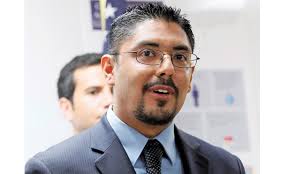
Sergio Garcia cut a sympathetic figure, and was ideally suited for the role of a party in a test case.  He did not sneak across the border; rather, he was brought over by his parents when he was 17 months old.  His father eventually attained citizenship, and Garcia himself has been in line for 19 years, waiting for an immigrant visa to become available.  When it does, it will legalize his presence in the country and provide a basis to adjust his status to lawful permanent resident.  Meanwhile, Garcia has graduated high school, college, and law school.  He passed the California bar exam on his first attempt, then applied for admission to the Bar. The Court noted that the State Bar Committee’s investigation found “that Garcia is a well-respected, hard-working, tax-paying individual who has assisted many others and whose application is supported by many members of the community, by past teachers, and by those for whom he has worked.”  In his application, Garcia candidly indicated that he was not a U.S. citizen, and that his immigration status was “pending.”

In many ways, the case represented an internal affairs matter for the California legal profession.  The California Supreme Court has final say over who can and who cannot practice law in the state.  But while the Court’s ultimate conclusion was not surprising, what was surprising was that not a single lawyer sitting on the bench, nor a single lawyer appearing before it, took any notice of the fact that Garcia was receiving very different treatment than other enterprising businessmen.  No one commented on the uncomfortable fact that this proceeding, conducted by lawyers before lawyers, established a preferred status for lawyers under the immigration laws. Continue reading

5 Comments

Filed under Law

IT IS TIME TO RELEASE JONATHAN POLLARD

In November 1985, a short, bespectacled Navy civilian researcher, with a history of erratic behavior and drug use, was stopped by FBI agents on his way home from work.  Allowed to call his wife, he uttered the word “cactus.”  After the call, his wife removed a suitcase from their apartment and called some Israeli acquaintances.Pollard

The researcher was Jonathan Pollard.  The Israelis were his handlers.  The suitcase was filled with intelligence materials, which Pollard had surreptitiously removed from his office.  The materials represented a small portion of the paper pile Pollard had stolen and provided to the Israelis over the previous 18 months.  In total, the purloined documents could fill a space 10 feet by 6 feet by 6 feet – almost as large as the prison cell Pollard was destined to occupy for the next 28 years.

Continue reading

4 Comments

Filed under Law

Usama bin Laden’s Trademark Concerns

One year after the killing of Usama bin Laden, the U.S. Government has declassified some of the materials seized during the raid on his compound.  The media had earlier reported that the terrorist leader was concerned that his organization’s brand had become tarnished by its association with attacks on noncombatants.  CNN gave this account last April:

Bin Laden well understood that al Qaeda’s brand name was in deep trouble, in particular, because the group and its affiliates had killed so many civilians.  ….  So badly tarnished had the al Qaeda brand become that bin Laden noodled with changing the name of his group. In an internal memo, bin Laden pointed out that “[President] Obama [says] that our war is not on Islam or the Muslim people, but rather our war is on the al Qaeda organization. So if the word al Qaeda was derived from or had strong ties to the word ‘Islam’ or ‘Muslims,’ or if it had the name ‘Islamic party’ it would be difficult for Obama to say that.”usama.trademark

A recently declassified transcript of an audiotape seized during the raid documents bin Laden’s trademark concerns.  The following transcript was translated by the Defense Language Institute Foreign Language Center, located in Monterey, California.  Continue reading

Leave a comment

Filed under Foreign Policy, Law

RE-BRANDING FOR COKE, CAUSES, AND CANDIDATES

What’s in a name?

According to Shakespeare, a rose by any other name would still smell as sweet. But Shakespeare never worked on Madison Avenue, and he did not study branding.

Businesses have long understood the importance and financial value of brands. According to a 2012 study by the branding experts at Interbrand, COCA-COLA is worth about $78 billion (that’s billion with a “B”), followed closely by APPLE. Remember, we’re talking about only the brands, not the inventory, manufacturing plants, warehouses, and other tangible “things” that stand behind those trademarks.COKELEAH

Businesses have also understood the occasional need for re-branding. When Philip Morris USA figured out that its tobacco products were tarnishing the reputation of its KRAFT and other non-tobacco lines, it changed its corporate name and logo to ALTRIA. When AIG realized that its acceptance of a federal bailout in 2008 was hurting its retirement and financial subsidiaries, it re-branded them as SAGEPOINT FINANCIAL and VALIC.

Social activists may consider themselves above the dull sublunary world of commerce, but in fact they are often its most apt students. Continue reading

3 Comments

Filed under Law, Politics

Grant’s Indian in Spielberg’s Lincoln

Steven Spielberg’s Lincoln takes history seriously.  While some of the details may be contrived – there is no record of black Union Army soldiers being assigned to greet the Confederate commissioners en route to negotiate a peace treaty – the film for the most part follows fact scrupulously.  Much of the dialogue is based on contemporary letters and journalistic accounts.

Spielberg’s obsession with historical accuracy extends even to background.

In two scenes featuring General Grant, viewers will notice standing behind him the silent, striking presence of an American Indian in the uniform of a Union Army officer.

Parker

(Parker, left, in film)

He is not there for setting.  The man depicted is Ely Parker, a lawyer, engineer, life-long friend of Grant, and full-blooded Seneca, whose life story would justify a movie of its own.

It deserves telling.

Continue reading

3 Comments

Filed under Culture, Law

TWINKIES ARE NOT ZOMBIES … YET

Trademark practitioners and junk food addicts (two groups whose ranks often overlap) are closely watching the bankruptcy of Hostess Brands, Inc. and the liquidation of its assets, including its famous TWINKIES brand.

Will a qualified buyer emerge to purchase the brand, and to ensure that TWINKIES — like PAN AM and ZENITH — remains alive, if only in some shrunken, transformed existence?

Or will TWINKIES go the way of all flesh, to that trademark graveyard populated by the likes of ATARI, BORDERS, CIRCUIT CITY, and TOWER RECORDS; marks once famous and ubiquitous, now lost, and by the wind grieved, ghosts which will never come back again?  (Pardon, Thomas Wolfe.)

 Image

In the past, those were the only choices for brands of failed businesses.  But in recent years, a new, dubious industry has emerged to offer a third choice.  Companies like Strategic Marks of Irvine, California, identify lost marks and try to revive them without the authorization of their erstwhile owners.  Most see these marks the way the Coroner of Oz saw the Wicked Witch of the East, as “not merely dead, but really most sincerely dead.”  But to Strategic Marks and its audacious founder Ellia Kassoff, these marks have an afterlife.  They see them the way Miracle Max saw Wesley, the hero of The Princess Bride: “only mostly dead.”  And as Miracle Max explained: “There’s a big difference between mostly dead and all dead.  Mostly dead is slightly alive.”

Continue reading

2 Comments

Filed under Culture, Law