Tag Archives: history

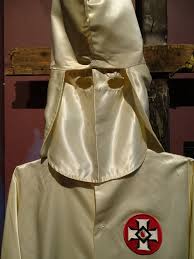
THE NEW KKK

On April 13, 2025, Cody Allen Balmer set fire to the residence of Pennsylvania Governor Josh Shaprio, while he and his family slept upstairs. That evening, the family had celebrated Passover, the Jewish holiday commemorating the liberation of the Hebrew people.

On May 21, 2025, Elias Rodriguez murdered Yaron Lischinsky and Sarah Milgrim, two young employees of the Israeli embassy who were about to be engaged to be married. They died outside the Capitol Jewish Museum, as they left a Young Diplomats events organized by the American Jewish Committee.

On June 1, 2025, Mohamed Sabry Soliman used a makeshift flamethrower and homemade Molotov cocktails in an attempt to incinerate Jewish community members in their weekly gathering to raise awareness of the plight of the hostages kidnapped by Hamas. He burned 15 people, one of them an 88-year old Holocaust survivor.

None of these murderers or would-be murderers concealed their motives. Balmer told the police: “Shapiro needs to know that [Balmer] … will not take part in his plans for what he wants to do to the Palestinian people.” He added: “You all know where to find me. I’m not hiding, and I will confess to everything that I had done.” Rodriguez proclaimed: “I did it for Palestine, I did it for Gaza …. ”  As the police took him into custody, he pulled out a red keffiyeh and chanted “Free, free Palestine!” Soliman yelled  “Free Palestine” during the attack and later told authorities that he wanted to “kill all Zionist people and wished they were all dead.”

Most pro-Palestinian demonstrators are not violent. But a minority are, and as recent events attest, they pose a real danger to the nation. Their violence has been compared to the lethal actions of the 1960s radicals, who resorted to assassination and bombs to protest the Vietnam War.

But there is another forerunner to today’s violent pro-Palestinian movement, one that not only constitutes a precedent, but may also provide guidance on how to counteract it.

That forerunner is the Ku Klux Klan.

Continue reading

2 Comments

Filed under Culture, Politics

NO, WE ARE NOT IN A CONSTITUTIONAL CRISIS

Is the nation facing a constitutional crisis?

“Sure are!” say any number of pundits. According to Adam Liptak of the New York Times, the question is not whether such a crisis exists, but rather how that crisis “will transform the nation.” Presumably, badly.  And to his colleague Jamelle Bouie, the actions of President Trump are not just “unconstitutional,” they are “anti-constitutional,” because they “reject the basic premise of constitutionalism.” In other words, asking whether Trump’s actions are merely unconstitutional should trigger the response: “We should only be so lucky.”

The truth is less dramatic. We are not facing a constitutional “crisis.” Rather, we are seeing exactly the kind of inter-branch conflict our Constitution was designed to foster.

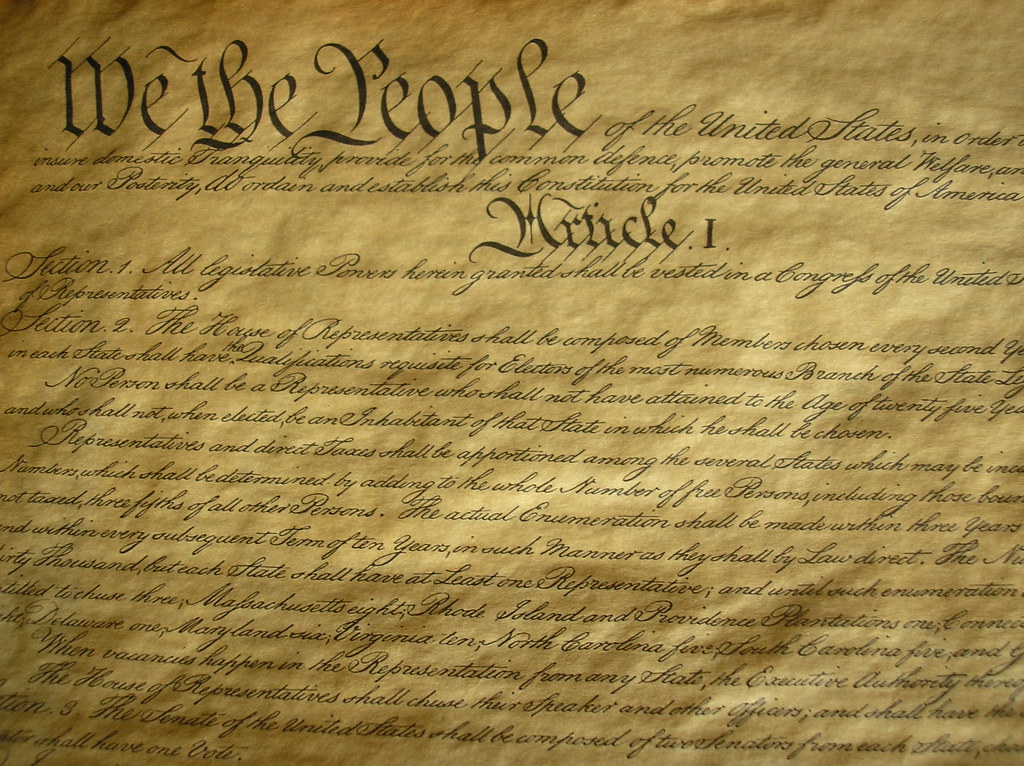
The level of discourse about a possible constitutional crisis would benefit if those wishing to opine were first required to read the Constitution. Not just the first ten amendments, commonly known as the Bill of Rights. The actual original un-amended document ratified in 1788.

Continue reading

Leave a comment

Filed under Law

YOU SAY YOU WANT A REVOLUTION

Do the people want a revolution?

The Trump administration thinks so.  And now that they are in office, they are ready to oblige.

They seem to be off to a good start. As they move to cut or eliminate federal spending programs, their approval rating climbs. A recent CBS poll gave Trump a 53% approval rating, high for him.  Harry Enten of CNN has noted that while Trump had a net positive rating for only 11 days in his first term, he has already surpassed that in his second, enjoying a net positive for all 21 days of his first three weeks in office.

But not all revolutions are created equal. Trump’s agenda – securing the border, cutting waste, removing biological males from women’s sports – may be popular. But that popularity could quickly vanish if he chooses the wrong revolutionary model for governing.

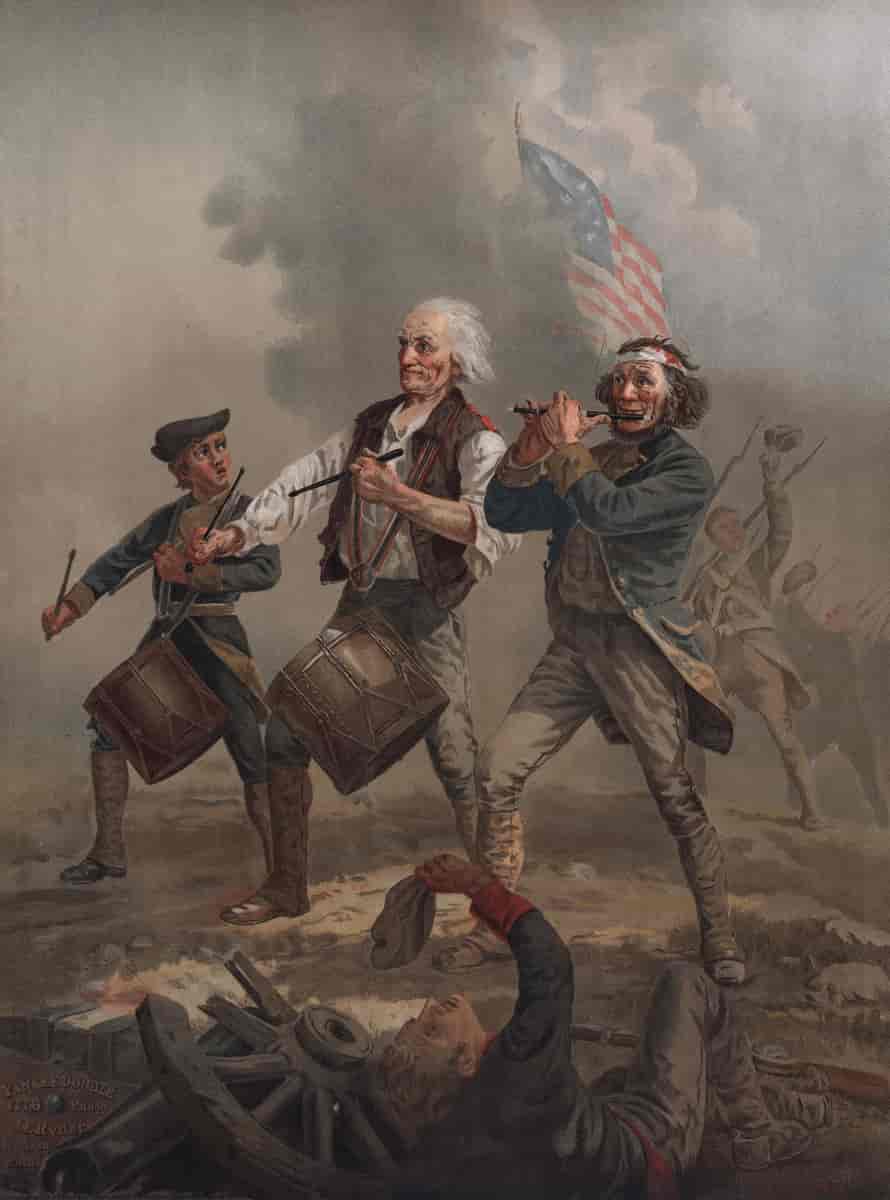
Will he choose the American or the French Revolution? Some historical context is in order.

Continue reading

Leave a comment

Filed under Politics

WHY TRUMP SHOULD WATCH “REAGAN”

President-elect (or should we say, President-elected-again) Donald Trump is not known for being much of a reader. So it is doubtful he is preparing for his second term by reading biographies of his presidential predecessors. But as he embarks, there is a useful teaching instrument available to him in movie form: Reagan, the biopic starring Dennis Quaid.  Watching it could be a good use of Trump’s time.

The movie, released two months before the election, chronicles the life of our 40th President, from his hardscrabble origins in a small town with an alcoholic father, to the White House.  It received the kind of reception that ought to appeal to the new President. Critics loathed it. According to Rotten Tomatoes, it earned a paltry 18% score among them. But ordinary Joes and Janes loved it.  Rotten Tomatoes recorded an astronomical 98% rating among regular moviegoers.

The movie is not Academy Award material, as even some honest fans of the Gipper have admitted. It is hagiography, in the tradition of Parson Weem’s Life of Washington.  (If Ronald Reagan ever confessed to chopping down a cherry tree, the movie would have shown it.) And a very wide chasm separates the respective ideologies, temperaments, and dispositions of Reagan and Trump.

Nevertheless, Reagan offers valuable lessons for the incoming administration, if Trump is willing to watch – and learn.  Here are a few of those lessons.

Continue reading

Leave a comment

Filed under Culture, Politics

SHOULD JEWS ABANDON THE IVIES?

Long before the Israeli armed forces moved into Gaza to destroy Hamas, in fact even while the Hamas murderers and rapists were still holding out in Israeli homes along the Gaza Envelope, top-tier American universities were the scenes of pro-Hamas protests, speeches, and encampments. Such deep-seated hostility toward Israel has caused many American Jews to ask: “Should Jews Abandon Ivy League Schools?” – as phrased in the headline of a Jerusalem Post interview of William Daroff, CEO of the Conference of Presidents of Major Jewish American Organizations.

The fear that our most prestigious universities are hostile environments, not only for Israel, but for Jews in general, was reinforced by the disastrous congressional hearings last December, where the Presidents of Harvard, MIT, and Penn were unable to say whether calls for the genocide of Jews would violate their schools’ conduct policies.

Is it time for American Jews to abandon elite universities and to look elsewhere for educational opportunities?  Several arguments have been advanced for doing just that.

Continue reading

2 Comments

Filed under Culture