On April 13, 2025, Cody Allen Balmer set fire to the residence of Pennsylvania Governor Josh Shaprio, while he and his family slept upstairs. That evening, the family had celebrated Passover, the Jewish holiday commemorating the liberation of the Hebrew people.
On May 21, 2025, Elias Rodriguez murdered Yaron Lischinsky and Sarah Milgrim, two young employees of the Israeli embassy who were about to be engaged to be married. They died outside the Capitol Jewish Museum, as they left a Young Diplomats events organized by the American Jewish Committee.
On June 1, 2025, Mohamed Sabry Soliman used a makeshift flamethrower and homemade Molotov cocktails in an attempt to incinerate Jewish community members in their weekly gathering to raise awareness of the plight of the hostages kidnapped by Hamas. He burned 15 people, one of them an 88-year old Holocaust survivor.
None of these murderers or would-be murderers concealed their motives. Balmer told the police: “Shapiro needs to know that [Balmer] … will not take part in his plans for what he wants to do to the Palestinian people.” He added: “You all know where to find me. I’m not hiding, and I will confess to everything that I had done.” Rodriguez proclaimed: “I did it for Palestine, I did it for Gaza …. ” As the police took him into custody, he pulled out a red keffiyeh and chanted “Free, free Palestine!” Soliman yelled “Free Palestine” during the attack and later told authorities that he wanted to “kill all Zionist people and wished they were all dead.”
Most pro-Palestinian demonstrators are not violent. But a minority are, and as recent events attest, they pose a real danger to the nation. Their violence has been compared to the lethal actions of the 1960s radicals, who resorted to assassination and bombs to protest the Vietnam War.
But there is another forerunner to today’s violent pro-Palestinian movement, one that not only constitutes a precedent, but may also provide guidance on how to counteract it.
That forerunner is the Ku Klux Klan.
Like the Ku Klux Klan, the violent pro-Palestinian movement is founded on a myth. In the case of the Klan, the myth was the “Lost Cause.” That myth romanticized the antebellum South as a peaceful plantation society, where happy blacks served under kind, paternalistic masters, until the Civil War destroyed the Eden. In the case of the pro-Palestinian movement, the myth is the “Nakba.” The Nakba, literally the “Catastrophe,” imagined a peaceful pre-1948 Palestinian homeland, where a Jewish minority lived in harmony under the benevolent dominance of their Arab neighbors, until the Zionists created a Jewish state and expelled 750,000 Arabs.
Both myths provide comfort to their adherents. Both are false.
The pre-Civil War South was a hellish landscape for enslaved blacks, whose families were often torn apart, with children sold away from their parents to distant plantations by their “paternalistic” masters.
The peaceful pre-Nakba Palestinian homeland never existed. Jewish residents were subjected to periodic massacres, in 1920, 1921, 1929, and 1936. Muhammad Amin al-Husayni, the Grand Mufti of Jerusalem and the leading Palestinian figure under the British Mandate, collaborated with the Germans during World War II, broadcasting pro-Axis propaganda and inciting violence against the Jews.
Nor did the independent Palestinian state imagined in the Nakba myth ever exist. Before the State of Israel was established in 1948, the land was governed by the British, and before that by the Ottoman Turks and before that by Mamluks. One may go back centuries, to Biblical times, searching for a Palestinian state, and the search will be in vain. None has ever existed.
In addition to basing their movements on myths, the Ku Klux Klan and the violent pro-Palestinian movement share a common commitment to using violence. Whether burning crosses or burning Jews, the violence was for similar strategic purposes. In the case of the Klan, the purpose of violence was to discourage newly enfranchised black slaves from exercising their civil rights, especially the right to vote. In the case of the violent pro-Palestinian movement, the purpose is to drive Jews from the public square, to deter them from publicly supporting the world one’s Jewish state, and to frighten them from openly identifying themselves as Jews.
The Klan was successful for many years. Post-Civil War Southern blacks lost political power because they were intimidated from running for office or voting. They did not recover that power until the Civil Rights movement of the 1960s.
Similarly, the pro-Palestinian movement has also achieved some success in its intimidation campaign. According to a recent State of Antisemitism in America Report from the American Jewish Committee, a majority of Jews (56%) have changed their behavior out of fear of antisemitism. The Report found that 40% avoid wearing or displaying items that might identify them as Jewish – such as yarmulkes or Stars of David. Although Jews in Boulder, Colorado have bravely resumed their weekly demonstrations in support of the hostages, one wonders how many others, having seen the terrifying spectacle of Jews burning alive, have refrained. Certainly, many Jewish parents must be restricting their children from participating in such demonstrations.
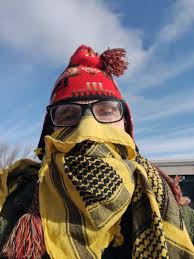
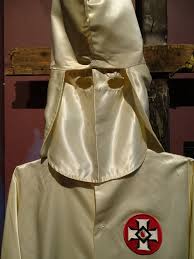
Another parallel between the Klan and the violent pro-Palestinian movement is their reliance on masks. In the case of the Klan, members wore bizarre conical hoods. Pro-Palestinian demonstrators, especially on college campuses, often wrap their faces with keffiyehs, disguising their identity. Such concealment encourages movement members to act lawlessly. According to Cornell University Law Professor William Jacobson, “The use of face masking has emboldened violence by anti-Israel and anti-American activists.”
Finally, the pro-Palestinian movement, like the Klan, favors large, muscle-flexing public spectacles.
In 1925, 25,000 Klansmen marched down Pennsylvania Avenue in an attempt to display their political power. In July 2024, thousands of pro-Palestinian demonstrators, many of them masked, marched along the same route to protest the visit of Israeli Prime Minister Benjamin Netanyahu. Outside the Capitol, they chanted: “Bibi, Bibi, We’re not done! The intifada has just begun!” They spray painted a monument with the words “Hamas is coming” in large red letters. They removed American flags outside Union Station and hoisted Palestinian ones in their place.
Like the Klan, the violent pro-Palestinian demonstrators chose the heart of the federal government as the appropriate locus to show off their clout.
Today, the Ku Klux Klan is a shadow of its former self. It has few members, and wields no influence. Its diminution may carry lessons for dealing with the violent pro-Palestinian movement.
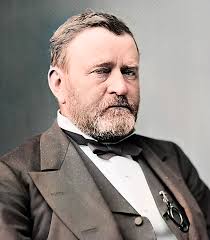
In 1871, President Grant led Congress to enact the Enforcement Act, also known as the Ku Klux Klan Act. His biographer, Ron Chernow, called Grant’s efforts a “magnificent achievement.” The law made it illegal to “go in disguise upon the public highway … for the purpose of depriving any person … of equal protection of the law.” He also issued an executive order, authorizing federal troops to arrest violators of the Ku Klux Klan Act and break up and disperse “bands of disguised marauders.”
The federal government and the states should consider similar legislation today. Demonstrators are less likely to engage in violent intimidation tactics when their faces are visible. The First Amendment provides wide protection for expressing viewpoints, even inflammatory ones. The only boundary is speech directed at inciting or producing imminent lawless action and likely to incite or produce such action. But the First Amendment does not guarantee the right to go in disguise in public places. People who spray paint public monuments with messages of support for Hamas, or who replace American flags with Palestinian ones, have no reasonable expectation of privacy. The public, and law enforcement, have a right to know who is engaging in such unlawful activities.
The Heritage Foundation, in its “Project Esther,” would go far beyond such legislation in dealing with the violent pro-Palestinian movement. It would identify a vast swath of pro-Palestinian individuals and institutions and target them for deportation, expulsion, defunding, and ostracism. While its motives may be correct, Project Esther’s methods are suspect. Among other shortcomings, it makes no distinction between violent and non-violent activists. Its overbroad approach runs afoul of First Amendment protection.
The Klan survived legislation aimed at combatting its activities. It survived FBI infiltration. It survived civil litigation and criminal prosecution.
But the Klan could not survive the public revulsion that arose as its role in fire-bombing churches and murdering civil rights workers became widely publicized.
While anti-masking legislation, and strict law enforcement, may help diminish the power of the violent pro-Palestinian movement, the ultimate solution is public rejection of – and disgust with – the movement’s methods and goals. This is a battle of ideas. The anti-Klan forces won their battle. But success took almost a century. We must do the same with the violent pro-Palestinian movement. But we must do so faster.
 toputitbluntly.com
Terrific article, immaculately reasoned and insightfully actionable.
Pingback: FRIDAY EARLY-MORNING EDITION - BIG PULPIT