
One rarely thinks of “Profiles in Courage” when one thinks of Donald Trump.
Ordinarily, he does not evoke the image of a statesman rising above politics, to say what needs to be said regardless of its unpopularity. Instead, President Trump often appears petty and vindictive. Just ask his former advisor John Bolton, a man threatened for assassination by Iran. Bolton’s secret service protection was removed after he criticized Trump.
But give credit where it’s due. In the face of dropping popularity numbers, Trump has taken an unpopular position on a major issue, and he has refused to back down.
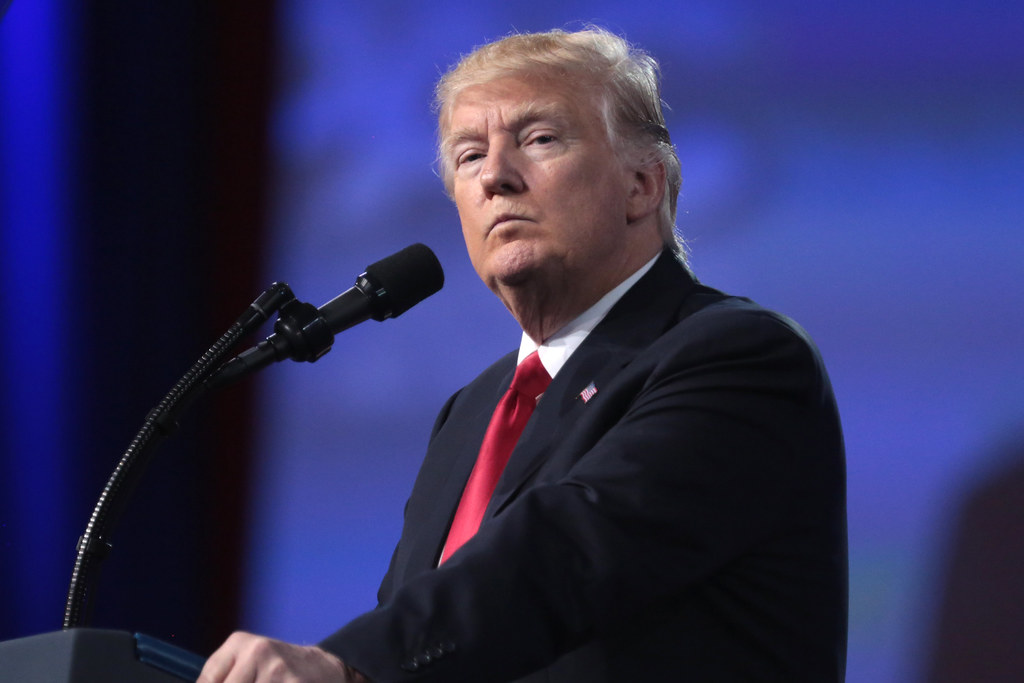
On May 12, on the eve of his trip to China, Trump was asked about the effect of bad economic news on his dealings with Iran. He said: “I don’t think about Americans’ financial situation… I think about one thing: we cannot let Iran have a nuclear weapon” Asked by a reporter how much the tough economic conditions are “motivating [him] to make a deal,” Trump responded: “Not even a little bit.” When pressed, Trump stood by his statement, insisting that “the most important thing by far is Iran cannot have a nuclear weapon….”
Democrats pounced on Trump’s remarks. Leah Leszczynski, spokesperson for the Democratic Party in Michigan, a battleground state, accused Trump of adopting the equivalent to “let them eat cake.”
Republicans offered a tepid defense, claiming, in effect, that he didn’t mean what he said. Senator John Cornyn of Texas dismissed Trump’s statement as “just a sort of a throwaway line.” Senator Cynthia Lummis of Wyoming declined to comment “mostly because I think he actually does care.”
CNN purporting to rise above the fray, pronounced Trump’s remark a “gaffe.” As Michael Kinsley famously observed, a gaffe is a moment when a politician inadvertently says something truthful. Trump’s remark was not a gaffe because it wasn’t inadvertent. Trump believes what he said. On his return from China, Trump stood by his position.
Donald Trump is right to do so, no matter the political cost. Consider the world we would inhabit if Iran became a nuclear power.
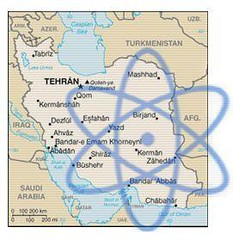
The Middle East is a dangerous, unstable neighborhood. But it would become many times more dangerous and unstable with a nuclear-armed Iran. Regional nations including Saudi Arabia, Egypt, and Turkey, fearful of Iranian hegemony, would race to acquire nuclear weapons of their own.
Terrorist organizations such as Hamas, Hezbollah, and the Houthis, sheltered under Iran’s nuclear umbrella, would be emboldened to increase their attacks on Israel and other pro-Western states. Massacres like that of October 7, 2023 would become commonplace.
Israel, confronting a truly existential threat, would be tempted to strike first, and not merely with conventional weapons, as it did in the Twelve-Day War of June 2025 and in Epic Fury of 2026. The emergence of a nuclear-armed Iran would create a serious threat of Israel employing the preemptive use of nuclear weapons. Israeli leaders have vowed that Masada will not fall again.
When considering these dark prospects, it is important to keep in mind that Iran is not Russia or the former Soviet Union. It is not China. It is not even North Korea. All of those nuclear-armed powers are ruled by cruel, belligerent leaders. But those leaders possess at least a modicum of rationality. They do not want to die.
The Iranian leaders are different. As the late Middle Eastern scholar Bernard Lewis observed in an August 8, 2006 Wall Street Journal essay, “Mutual Assured Destruction, the deterrent that worked so well during the Cold War, would have no meaning [for them]. At the end of time, there will be general destruction anyway. What will matter will be the final destination of the dead — hell for the infidels, and heaven for the believers. For people with this mindset, MAD is not a constraint; it is an inducement.”
Former Iranian President Akbar Hashemi Rafsanjani, once deemed a moderate by Western observers, gave a Friday sermon at Tehran University in 2002, in which he said that because of Israel’s small size, only one nuclear weapon would be needed to “destroy everything and wipe it off the face of the earth,” while a retaliatory strike would “only do damage” to the much wider Islamic world without completely destroying it.
Rafsanjani later tried to walk back his ghoulish statement, claiming that he was not threatening Israel, but merely trying to show why having nuclear weapons was not even in the Jewish State’s interest. But why should Israel trust the former leader of a country that unabashedly calls for “Death to Israel” as a routine ceremonial chant.
The brutal calculus illustrated by Rafsanjani’s sermon is perfectly consistent with Iranian policy under the mullahs’ theocracy. During the 1980 – 1988 Iran-Iraq War, Iran’s leaders distributed plastic keys to children, and told them that these were keys to paradise. Then they sent them off to clear minefields by walking over them. The State Department estimates that 36,000 Iranian children were killed, and 3,000 wounded, carrying out this barbaric exercise.
If that is how much Iran’s leaders value the lives of their own Shia children, how reluctant would they be to vaporize Jewish children — or Christian or Sunni or Druze or Bahai children, for that matter?
In assessing Trump’s statement, we should recall that the first duty of an American President is to protect Americans. The Constitution vests in him the command of the nation’s military, and the power, with the advice and consent of the Senate, to make treaties.
It is not the President’s job to run the economy. Of course, one hopes that our Presidents will pursue policies that lead to growth and prosperity. At minimum, one hopes they will not pursue policies (like arbitrary tariffs) that impede growth and prosperity.
But economics are not the President’s primary concern. We don’t – or at least, we shouldn’t — elect Presidents to boost our 401(k)s or our IRAs. We don’t – or at least we shouldn’t – elect Presidents to pick the next economic boom product or technology.
We elect Presidents to protect us.
Every American president has declared that under American policy, Iran must never become a nuclear power. In elevating that policy above the economic pain imposed upon Americans while carrying it out, Trump was not exhibiting callousness. Nor was he committing a gaffe. He was, in his own way, speaking the truth and, yes, speaking it with courage.


Let history be the guide, check out Hitler’s path to ruin for Germany. Iran’s government has taken hostages, funded terrorist groups, launched missiles and drones at their neighbors, had rallies with chants of “death to American, death to Israel”, and now holding the world hostage with their threats on a major international waterway. Mass murder 1939-1945 could have been prevented in Europe if France and Britain had stood up in 1938. History repeats, it’s 1938 and Iran is the new Germany.