
America’s 250th birthday is an occasion for introspection. But as we examine and reflect upon our glories and our shortcomings, one element of our national character is rarely mentioned: the American spirit of free enterprise. That’s unfortunate, because it should be.
On July 4, 1776, the Founding Fathers were probably too distracted to notice the publication in London just three months earlier of a book entitled The Wealth of Nations. Authored by a Scottish economist and moral philosopher named Adam Smith, the book laid out the case for an entrepreneurial society with an economy governed by the “invisible hand” of market forces. The Revolution itself was a rejection of the British government’s attempt to regulate and control colonial commerce. As the ripple effects of the book crossed the Atlantic and lapped onto our shores, Adam Smith’s ideas were embraced by the new nation.
Thomas Jefferson called The Wealth of Nations “the best book extant” on political economy. James Madison studied the book extensively and nominated it for inclusion in the proposed congressional library. Alexander Hamilton, who disagreed with Jefferson and Madison on many domestic issues, nevertheless absorbed Smith’s teachings. Ron Chernow, Hamilton’s biographer, notes that his Report on Manufactures “displays an intimate familiarity” with the book.
What united the often disputatious Founding Fathers, and led them to welcome Smith’s work, was their shared idea of a thriving, dynamic future economy, powered by upwardly mobile citizens, one that would radically diverge from the static, stratified systems of Europe.

The young nation was filled with ambitious men on the make, eager to amass fortunes in the richly resourced, sparsely populated continent. The French visitor Alexis de Tocqueville observed this spirit of enterprise. In his Democracy in America, written in 1835, Tocqueville noted that nearly everyone, regardless of wealth, worked for a living, and that unlike European aristocrats who limited themselves to “noble” pursuits, Americans enthusiastically embraced commerce and business. “A man however opulent we may suppose he is,” he wrote, “is almost always dissatisfied with his fortune.” Consequently, “nearly all the tastes and habits born from [American] equality naturally drive men towards commerce and industry.”
The drive to make fortunes was the reason the United States, as it matured in the 19th century, changed the world by creating entirely new industries.
While Europeans continued to produce custom-made complex goods by hand, American pioneers like Eli Whitney (firearms) and Eli Terry (clocks) developed the first assembly lines. Goods could now be produced rapidly and inexpensively, using interchangeable parts. Mass production democratized commerce, making an array of products widely affordable.
Americans revolutionized communications by inventing the telegraph (Samuel Morse) and, later, the telephone (Alexander Graham Bell). They mechanized agriculture by inventing the steel plow (John Deere) and the mechanical reaper (Cyrus McCormick).
Oil drilling and refining on a mass scale were developed by Americans Edwin Drake and John D. Rockefeller, creating the infrastructure for the modern industrial society. As petroleum replaced whale oil as a source of light and heat, the oil industry delivered the added benefit of saving the whale population from being hunted into extinction.
Charles Goodyear developed vulcanization, and suddenly highly unstable natural rubber could now be used for waterproof boots and raincoats. In time, rubber would also be used to make tires for automobiles – yet another industry pioneered by Americans, who invented the stationary assembly line (Ransom Olds) and the moving assembly line (Henry Ford).
The American drive to become rich by innovating continues today, and is a magnet drawing foreign-born innovators to our shores. Politicians enjoy inveighing against billionaires, but it is interesting to note how many American billionaires are immigrants, many of whom arrived here with little or nothing before creating their fortunes.
Sergey Brin, who co-founded Google (now Alphabet) came to the United States at age six, having left Russia to escape anti-Semitism. Jay Chaudhry, who founded Zscaler, grew up in a small village in India that lacked running water and electricity. Jan Koum, co-founder of WhatsApp, left Ukraine, and immigrated to California with his mother, where they started out living on food stamps. Jensen Huang, who co-founded Nvidia, left his homeland in Taiwan and arrived in the United States as a young child.
Peter Thiel came here from Germany, before founding PayPal, Palantir, and Founders Fund. Elon Musk, the founder of Tesla and SpaceX and the world’s first trillionaire, immigrated to the United States from South Africa.
Though not billionaires (at least not yet), it’s worth noting that many American high-tech companies are helmed by foreign-born CEOs, including Sundar Pichai of Alphabet (India), Satya Nadella of Microsoft (India), and Lisa Su of AMD (Taiwan). The spirit of enterprise lured them here, enriching the nation even as they enriched themselves.
Another immigrant’s life course demonstrates what distinguishes America from other lands. Arnold Schwarzenegger was born into the lower-middle class in the Austrian town of Graz. He recognized early on that he was made of different stuff than his less motivated countrymen, and so he left to become an American. A 2003 New York Times profile noted:
Mr. Schwarzenegger’s career … has all the elements that the average Austrian — with his dreams of a tenured job in the bureaucracy that leads to early retirement, with his love for his 38-hour work week and his five weeks of holiday per year — would despise: venturing into the unknown, enduring hard work and physical pain, testing the limits of body and mind, and drawing a road map to the top.
The spirit of enterprise is visible outside the commercial world. It permeates American language and culture.
Ayn Rand, the philosopher-novelist who fled the Soviet Union to come to this country, has her hero Francisco D’Anconia deliver this speech:
If you ask me to name the proudest distinction of Americans, I would choose–because it contains all the others–the fact that they were the people who created the phrase “to make money.” No other language or nation had ever used these words before; men had always thought of wealth as a static quantity–to be seized, begged, inherited, shared, looted or obtained as a favor. Americans were the first to understand that wealth has to be created. The words ‘to make money’ hold the essence of human morality.
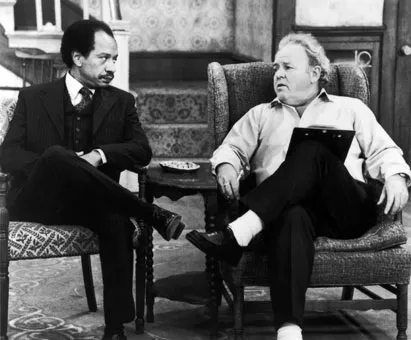
On the other side of the political spectrum, the liberal Norman Lear created The Jeffersons, a sitcom spin-off from his hugely popular All in the Family. The program centers around George and Louise Jefferson, who originally live in a lower-middle class neighborhood in Queens, not far from Archie Bunker. George is a janitor; his wife works as a housekeeper. But George is ambitious and street-smart. Using a personal injury settlement from a bus accident as seed money, he starts a dry-cleaning business in Queens, then expands it into a Manhattan-based multi-store empire. He and Louise leave Archie Bunker’s neighborhood and move into a deluxe apartment on the Upper East Side. The show’s theme song, Movin’ on Up, is a paean to the spirit of enterprise.
It may seem inappropriate to celebrate free enterprise at a time when self-declared socialists are winning elections. But they are winning in cities and districts that do not reflect the national attitude. The spirit of enterprise still runs very deep in this country. A Harvard-Harris poll conducted last February found that Americans remain overwhelmingly pro-free enterprise: 76% of voters said America should be run as a free enterprise country, including a strong majority across political parties, and 78% said they believed that they have a better life under that system.
As we celebrate the nation’s 250th birthday, we would do well to remind ourselves of what visitors like Toqueville, body-builders like Arnold, and high-tech titans like scores of newcomers to our shores have long noted. The United States of America is still a land of opportunity, where success and riches are attainable, and dreams, though often deferred, still have a pleasing tendency to come true.

