Category Archives: Foreign Policy

WHY ISRAEL INNOVATES

In the summer of 2025, Israelis had cause for despair. Forty eight living and dead hostages languished in Gaza. In the wake of Israel’s military response to the largest massacre of Jews since the Holocaust, the International Criminal Court issued arrest warrants for Israel’s Prime Minister and for a former Defense Minister on charges of war crimes. Israeli tourists were advised by their government to avoid conspicuous signs of “Israeliness” while abroad and to refrain from posting their whereabouts on social media. Following the murders of two Jewish worshippers at a Manchester synagogue in the United Kingdom, Police in Birmingham, citing fears of further violence, announced that Israeli fans would be barred from attending a League Europa soccer match.

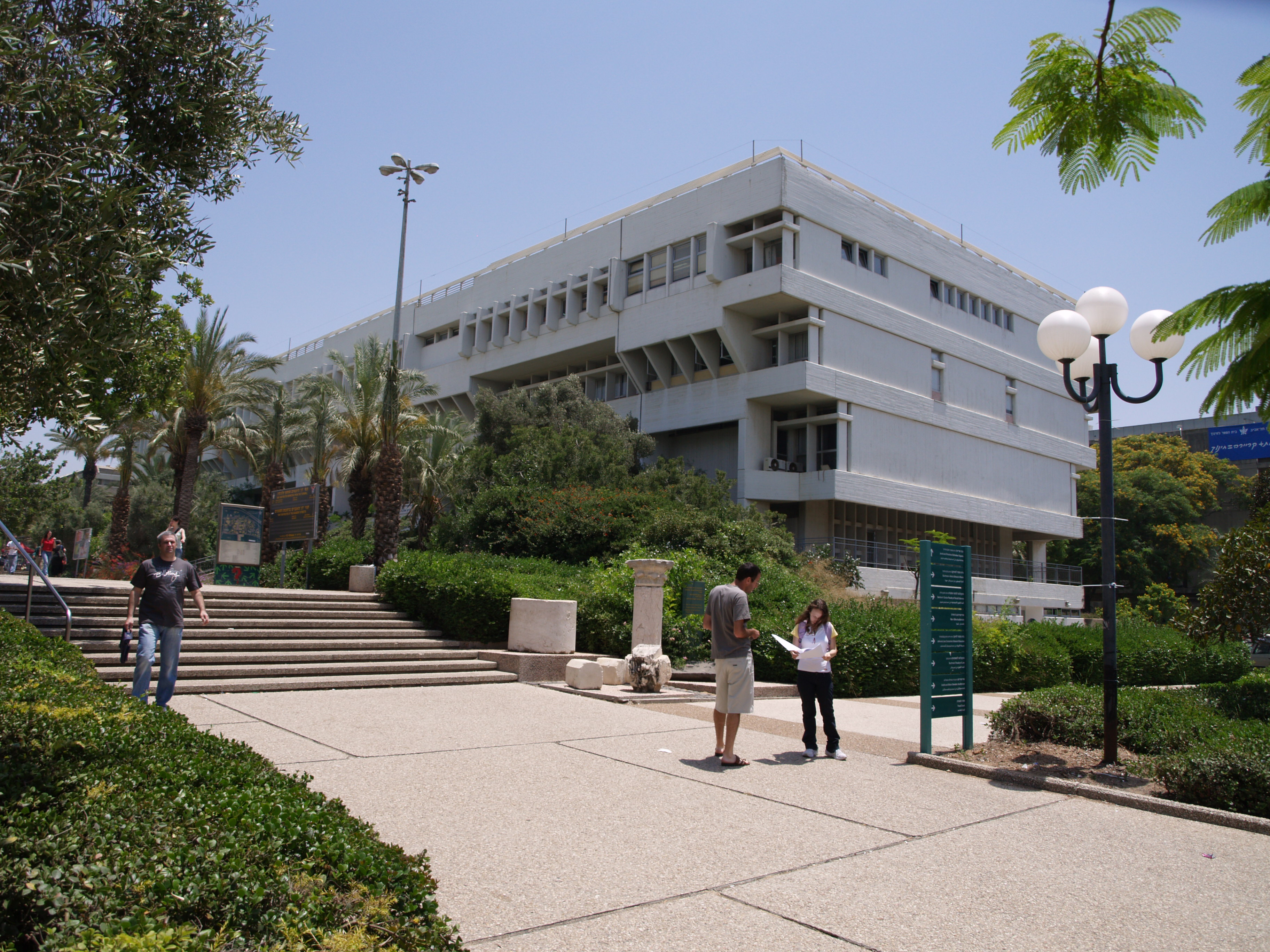
Amid the distress, and hardly noticed by the hostile world outside its borders, Israel’s Tel Aviv University announced that it was preparing to perform the world’s first human spinal cord implant.

Over 15 million people worldwide live with spinal cord injuries, preventing them from walking. Unlike other human tissues, spinal cord neurons cannot naturally regenerate. The implant procedure, if successful, will replace damaged spinal cord material with lab-grown material that will fuse with tissue above and below the injury, creating new pathways for nerve signals to travel.

This pioneering medical procedure would merit attention under any circumstances. But the fact that it emerged from a tiny country ostracized by much of the world, and under attack on many fronts by terrorist bands, makes it all the more extraordinary. This is especially so because the spinal cord advance is only one of a number of healthcare innovations emanating from Israel at the very time it endures international ostracism and confronts threats to its survival.

Many of these dramatic advances have arisen from its war with Hamas. As the New York Post reported last year:

From surgical robots that remove bullets and shrapnel to 3D-printed prosthetics tailored for rapid deployment, to a battlefield burn treatment developed from pineapples, [Israeli] technologies are redefining modern medicine and saving lives. 

Continue reading

Leave a comment

Filed under Culture, Foreign Policy

THE LURE OF PALESTINIAN STATEHOOD

In the past few weeks, several Western countries have announced that they intend to recognize a Palestinian state. France led the way. On July 26, President Emmanuel Macron, in a letter posted on X, announced that France would recognize a Palestinian state when the UN General Assembly meets in September. Three days later, UK Prime Minister Keir Starmer declared that his country too would extend recognition in September at the UN, unless Israel agreed to a cease fire, withdrew from Gaza, and halted West Bank settlements.  The next day, Canadian Prime Minister Mark Carney issued a similar statement. Australia quickly followed suit. At the same time, New Zealand’s Foreign Minister Winston Peters announced that his country would make a formal decision in September. There is no doubt what that decision will be.

Each of these governments believes that recognizing a Palestinian state will advance the cause of peace in the Middle East. Each is wrong.

Continue reading

2 Comments

Filed under Foreign Policy

THE LAUGHINGSTOCK PRESIDENCY

It is safer to be feared than loved, observed Niccolò Machiavelli (a man who knew more of one than the other). Donald Trump may soon learn that it is safer to be hated than ridiculed.

President Trump has never enjoyed wide popularity. He began his second term with an initial approval rating lower than any other incoming president since such polling began in 1953.  And that relatively low number was higher than any rating he enjoyed in his first term, when he became the only president in the history of Gallup polling to never break the 50% approval level.  Yet he has remained a force to be reckoned with because he is very good at handling hostility.

But handling hate is one thing. Handling laughter is another.

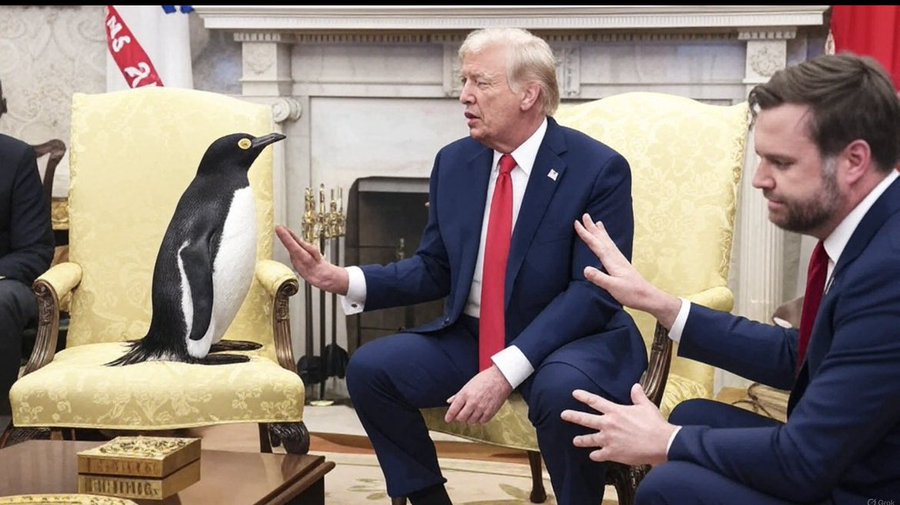
As we approach the second quarter of the first year of Trump’s second term, the biggest threat to his administration’s success is coming into focus. It is not resistance. It is not revulsion. It is ridicule. The Trump administration is in danger of becoming a laughingstock.

Continue reading

3 Comments

Filed under Foreign Policy, Politics

WHAT ZELENSKY CAN LEARN FROM BIBI

On February 24, 2022, Russia invaded Ukraine. In keeping with established Russian military doctrine, its invasion plans called for the immediate decapitation of the Ukrainian government, including the capture and execution of its President, Volodymyr Zelensky . The U.S. Government, which had confidential sources in the Kremlin, disclosed that Zelensky was a “prime target.”   Ukrainian intelligence disclosed that the Russians had marked Zelensky as “target No.1” and his family as “target No.2.”

The U.S. Government offered to evacuate Zelensky and his family from Kyiv to safety.

Zelensky declined the offer, stating: “The fight is here; I need ammunition, not a ride.”

It is worth recalling these facts while reviewing the nauseating scene that played out in the Oval Office last Friday. President Trump thought he could browbeat Zelensky, just as he had gelded his Secretary of State, who sat there, silent and ashen. But it simply was not in Zelensky’s DNA to stay quiet while Trump and his Vice Presidential lackey berated him. Instead, Zelensky calmly but forcefully corrected Trump and Vance when they uttered lies about Ukraine’s record of willingness to negotiate, Europe’s  level of support for Ukraine, and Putin’s trustworthiness.

He did not immediately correct their lie about not thanking the United States for its support, perhaps because he had thanked America so many times (33 times in English, and an unknown number in Ukrainian, according to one count), it hardly seemed necessary. Nevertheless, immediately after the meeting, he wrote on X: “Thank you America, thank you for your support, thank you for this visit. Thank you POTUS, Congress, and the American people.”

But however disgusting Trump’s performance may have been, Volodymyr Zelensky cannot entirely escape responsibility for the debacle.  After all, he knew full well the nature and character of the man he was meeting. Just days before the meeting, Trump had called him a “dictator without elections” and had stated that Ukraine “never should have started” the war. Zelensky should have been prepared to deal with Trump without jeopardizing Ukraine’s supply of American military assistance.

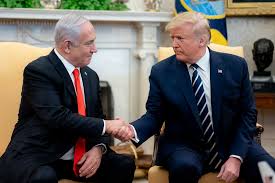
It would have been difficult but Zelensky could have placated Trump without groveling. How? By emulating another leader, Israeli Prime Minister Benjamin Netanyahu.

Continue reading

2 Comments

Filed under Foreign Policy

ONE CHEER FOR THE HOSTAGE DEAL

There is jubilation in Tel Aviv over the news of an apparent cease-fire and hostage-release agreement.

There is also jubilation in Gaza and Ramallah and Tehran (where the deal was hailed as a “victory”). Even the Houthis are celebrating.   

President Biden and President-elect Trump are competing to see who can claim more credit – a competition they may live to regret.

How can so many differing and hostile elements cheer for the same arrangement? Let’s be clear. This is a horrible deal. But to paraphrase Winston Churchill’s comment on democracy, this is the worst outcome to the war in Gaza except for all the other outcomes that have been considered.

Continue reading

1 Comment

Filed under Foreign Policy

JUST GO ALREADY!

“It is not fit that you should sit here any longer. You have sat here too long for any good you have been doing lately … In the name of God go.” Oliver Cromwell to the Long Parliament, 1653

This coming week, Bob Woodward’s latest book “War” will be released. It will feature several critical, profanity-laced remarks about Israeli Prime Minister Benjamin Netanyahu attributed to President Biden.

It will also remind us of why Oliver Cromwell’s famous words to the Long Parliament seem so apt today. Joe Biden has about 3 months left in office. He cannot go too soon. 

According to CNN, which obtained an advance copy, in the Spring of 2014, Biden privately remarked: “That son of a bitch, Bibi Netanyahu, he’s a bad guy. He’s a bad fucking guy!” He also referred to Netanyahu as a “fucking liar.”

“Bibi, what the fuck?” Biden yelled at Netanyahu in a July telephone conversation, according to Woodward’s book.

These examples of Biden’s penchant for – um, colorful – language, are not exactly news. Last February, Jonathan Martin of Politico reported that Biden called Netanyahu “a bad fucking guy.” Nor are they particularly newsworthy. American presidents dating back to George Washington have been known for voicing strong opinions in private.

A Rolling Stone article of a few year back recounts that President Obama referred to Mitt Romney as “a bullshitter” and Kanye West as “a jackass.” Vice President Dick Cheney advised Senator Patrick Leahy to “go fuck himself” after the two engaged in an argument over Cheney’s ties to Halliburton.  President Truman called General Douglas MacArthur a “dumb son of a bitch,” and he called Richard Nixon a “shifty-eyed goddamned liar.”  A recounting of President Nixon’s [expletive deleted] characterizations of his enemies would fill an encyclopedia.

What makes these recent Biden disclosures significant is the fact that, when judged in context, the remarks remind us of the incredibly poor judgment he has demonstrated throughout his career.

Continue reading

3 Comments

Filed under Foreign Policy

A NEW PAGE(R) IN HISTORY

By the brutal nature of war, urban battles always cause disproportionate civilian death tolls. When Rome suppressed the Great Jewish Revolt in 70 CE, they faced an army in Jerusalem of about 21,000 men. The civilian death toll has been estimated as between 600,000  (Tacitus) and over one million (Josephus). When the Red Army conquered Berlin in 1945, it faced a German force of about 45,000 soldiers.  Over 300,000 civilians died in the battle.

Since October 7, it has become almost routine in fashionable circles to accuse Israel of “genocide.” But the events of the past 48  hours show the opposite. In conducting its war against Hezbollah, a terrorist organization sworn to its destruction, Israel has accomplished a feat virtually unimaginable in the annals of military history. It has disabled or killed thousands of enemy combatants, in urban settings, deeply embedded within the local civilian population, with almost no civilian casualties.

On Tuesday, thousands of pagers exploded in Beirut and other locations in Lebanon and Syria, wounding about 2,800 people. Almost exactly 24 hours later, dozens of walkie-talkies exploded, injuring an additional 450 people.

Nearly every single victim was a soldier or member of Hezbollah. Well, not every victim. Iran’s ambassador to Lebanon was also wounded. He is not employed by Hezbollah. In fact, it would be more accurate to say that Hezbollah is employed by the ambassador. The fact that the Iranian ambassador was using a Hezbollah pager reveals much about Hezbollah’s status as an Iranian puppet.

Continue reading

2 Comments

Filed under Foreign Policy

WHY NOT ESCALATE?

Since October 7, American policy toward Israel has been muddled and variable. But on one point, American policy has been remarkably consistent. No matter what is going on, no matter who is involved, the U.S. habitually insists that Israel avoid “escalation.”

On April 15, 2024, after Iran directly attacked Israel by launching over 350 ballistic missiles, cruise missiles, and drones, Secretary of State Antony Blinken publicly advised Prime Minister Benjamin Netanyahu “to resist the temptation to make a foolish display of strength,” but to choose instead to “prevent escalation.”

On July 17, after Israel endured a barrage of missiles launched by Hezbollah in Lebanon, State Department spokesman Matthew Miller said: “We don’t want to see escalation at all in the North. We’ve made that clear to the government of Israel directly.”

On July 28, after a rocket attack on a Druze village soccer field killed 12 children and wounded 40 other civilians, Secretary of State Blinken said: “I emphasize Israel’s right to defend its citizens… But we also don’t want to see the conflict escalate.”

On August 20, speaking in Tel Aviv during his ninth trip to the region. Blinken summed up America’s policy, noting that it was designed to “send the message strongly to every concerned party not to take any steps that would escalate tensions ….” In case any doubt remained, he added that escalation avoidance had been U.S. policy “from day one, since October 7th.” 

Repetition does not make a policy rational. Is escalation avoidance a policy worth keeping?

Continue reading

4 Comments

Filed under Foreign Policy

ISRAEL AT WAR: FAILURE AND FORTITUDE

Nine months into its war with Hamas, Israel is a nation in a state of paradox.

On the one hand, there is a deep-seated sense of failure.  Hamas, though badly mauled, still exists. Its senior leaders, Yahya Sinwar and Mohammed Deif, are alive and issuing orders. The organization operates as a statelet, issuing defiant declarations while pretending to negotiate, through intermediaries, with the United States and Israel. It still holds 116 hostages, living or dead.

In the North, 60,000 Israelis remain refugees in their own country, as Hezbollah launches daily rocket attacks, rendering much of the region uninhabitable.

Beyond Israel’s borders, Houthi rebels attack Red Sea shipping.  And of uppermost concern, Iran, the chief sponsor of all this terror, moves ever closer to acquiring weapon-grade fissile material for nuclear weapons. Israel seems unable, and its main ally the United States seems unwilling, to stop Iran.

And yet, in the midst of this overarching sense of failure, something else is going on in Israel, something subtle but evident to visitors.

Continue reading

2 Comments

Filed under Foreign Policy, Politics

MUNICH ON THE CHARLES

It is tempting to overuse the “Munich analogy” but something about the way Harvard University proudly announced the negotiated settlement of the Harvard Yard encampment problem brought to mind the image of Neville Chamberlain waving a piece of paper and proclaiming “Peace in our time.” For his role as a peacemaker, interim President Alan Garber was immediately lauded in progressive quarters for having achieved a “peaceful outcome …  that had eluded some other colleges and universities where officials have resorted to calling the police to clear demonstrators.”

But calling the police to deal with unlawful conduct is proper. That is why we have police. What is not proper is capitulation. Even worse is ignominious capitulation. That is what just happened on the Charles River.

Three weeks ago, protesters styling themselves “Harvard Out Of Palestine” (HOOP)  set up an encampment in Harvard Yard to protest Harvard’s supposed connection to the war in Gaza. No one questions their right to protest. But trespassing is another matter. After tolerating the tent city for 12 days, President Garber issued a statement that declared, in essence, “Enough.”

He noted that the encampment was causing numerous disruptions to the University. Exams had to be moved to other locations. Safety concerns over students sleeping outdoors required limiting access to the Yard. Students complained that the campers’ noise made it impossible for them to sleep, and the congestion made it impossible to move freely about the campus. President Garber cited reports that non-protesting students were being “intimidated and harassed,” and that passers-by were being “confronted, surveilled, and followed.”

President Garber concluded his statement with a stern warning:

I write today with this simple message: The continuation of the encampment presents a significant risk to the educational environment of the University. Those who participate in or perpetuate its continuation will be referred for involuntary leave from their Schools. Among other implications, students placed on involuntary leave may not be able to sit for exams, may not continue to reside in Harvard housing, and must cease to be present on campus until reinstated. (emphasis in original)

That was then.

Continue reading

4 Comments

Filed under Culture, Foreign Policy