WHAT ZELENSKY CAN LEARN FROM BIBI

On February 24, 2022, Russia invaded Ukraine. In keeping with established Russian military doctrine, its invasion plans called for the immediate decapitation of the Ukrainian government, including the capture and execution of its President, Volodymyr Zelensky . The U.S. Government, which had confidential sources in the Kremlin, disclosed that Zelensky was a “prime target.”   Ukrainian intelligence disclosed that the Russians had marked Zelensky as “target No.1” and his family as “target No.2.”

The U.S. Government offered to evacuate Zelensky and his family from Kyiv to safety.

Zelensky declined the offer, stating: “The fight is here; I need ammunition, not a ride.”

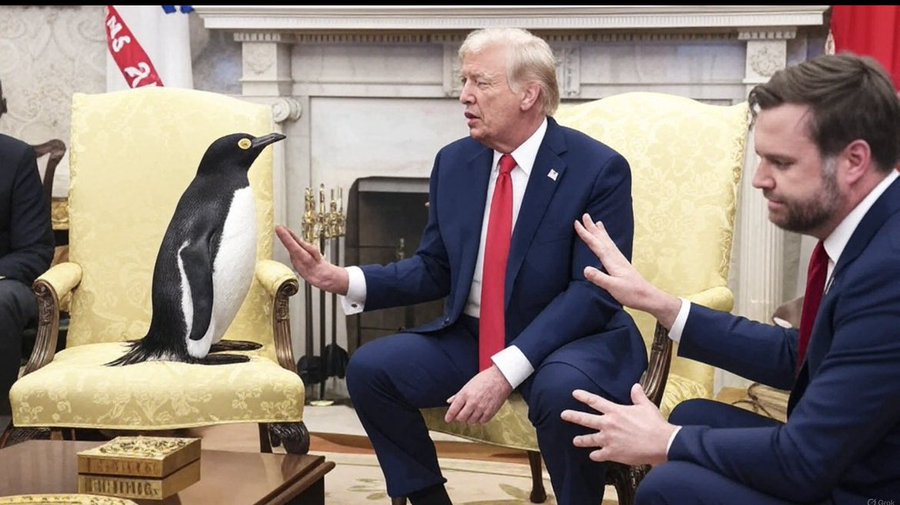
It is worth recalling these facts while reviewing the nauseating scene that played out in the Oval Office last Friday. President Trump thought he could browbeat Zelensky, just as he had gelded his Secretary of State, who sat there, silent and ashen. But it simply was not in Zelensky’s DNA to stay quiet while Trump and his Vice Presidential lackey berated him. Instead, Zelensky calmly but forcefully corrected Trump and Vance when they uttered lies about Ukraine’s record of willingness to negotiate, Europe’s  level of support for Ukraine, and Putin’s trustworthiness.

He did not immediately correct their lie about not thanking the United States for its support, perhaps because he had thanked America so many times (33 times in English, and an unknown number in Ukrainian, according to one count), it hardly seemed necessary. Nevertheless, immediately after the meeting, he wrote on X: “Thank you America, thank you for your support, thank you for this visit. Thank you POTUS, Congress, and the American people.”

But however disgusting Trump’s performance may have been, Volodymyr Zelensky cannot entirely escape responsibility for the debacle.  After all, he knew full well the nature and character of the man he was meeting. Just days before the meeting, Trump had called him a “dictator without elections” and had stated that Ukraine “never should have started” the war. Zelensky should have been prepared to deal with Trump without jeopardizing Ukraine’s supply of American military assistance.

It would have been difficult but Zelensky could have placated Trump without groveling. How? By emulating another leader, Israeli Prime Minister Benjamin Netanyahu.

Continue reading

2 Comments

Filed under Foreign Policy

YOU SAY YOU WANT A REVOLUTION

Do the people want a revolution?

The Trump administration thinks so.  And now that they are in office, they are ready to oblige.

They seem to be off to a good start. As they move to cut or eliminate federal spending programs, their approval rating climbs. A recent CBS poll gave Trump a 53% approval rating, high for him.  Harry Enten of CNN has noted that while Trump had a net positive rating for only 11 days in his first term, he has already surpassed that in his second, enjoying a net positive for all 21 days of his first three weeks in office.

But not all revolutions are created equal. Trump’s agenda – securing the border, cutting waste, removing biological males from women’s sports – may be popular. But that popularity could quickly vanish if he chooses the wrong revolutionary model for governing.

Will he choose the American or the French Revolution? Some historical context is in order.

Continue reading

Leave a comment

Filed under Politics

ONE CHEER FOR THE HOSTAGE DEAL

There is jubilation in Tel Aviv over the news of an apparent cease-fire and hostage-release agreement.

There is also jubilation in Gaza and Ramallah and Tehran (where the deal was hailed as a “victory”). Even the Houthis are celebrating.   

President Biden and President-elect Trump are competing to see who can claim more credit – a competition they may live to regret.

How can so many differing and hostile elements cheer for the same arrangement? Let’s be clear. This is a horrible deal. But to paraphrase Winston Churchill’s comment on democracy, this is the worst outcome to the war in Gaza except for all the other outcomes that have been considered.

Continue reading

1 Comment

Filed under Foreign Policy

A TALE OF TWO CITY KILLINGS

The nation’s attention is currently focused on two killings that occurred blocks apart in the same city.  The different national reactions to these two New York events may seem to reflect the political fault lines in our country. But they expose something deeper than politics. They expose different societal attitudes toward the enduring conflict between order and chaos.

The first killing occurred on May 1, 2023, on an F-train near the Broadway-Lafayette subway station. Daniel Penny, an ex-Marine, grabbed Jordan Neely in a chokehold from behind, and held him for six minutes. Neely a homeless man with a record of 42 prior arrests, including 4 for alleged assault, had been threatening passengers, announcing “someone’s going to die today” and telling them that he did not care if he was the one.  At the time of his death, there was an outstanding warrant for his arrest, arising from his assault on a 67-year old woman on a subway car. In that incident, the victim sustained a broken nose, a fractured orbital bone, and bruising and swelling of the back of her head.

The second killing occurred on December 4, 2024, at the Midtown Manhattan Hilton Hotel, about an hour’s walk from the first incident.  Brian Thompson, the CEO of United Healthcare, was on his way to an investor conference when he was fatally shot by a masked assailant. The as yet unidentified killer fled the scene on a bicycle, and is now believed to have left the City. 

Penny is currently on trial for the death of Neely. The death of Thompson is under investigation.   

Continue reading

1 Comment

Filed under Law, Politics

WHY TRUMP SHOULD WATCH “REAGAN”

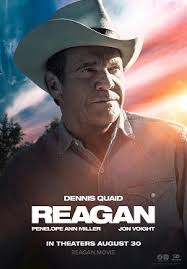
President-elect (or should we say, President-elected-again) Donald Trump is not known for being much of a reader. So it is doubtful he is preparing for his second term by reading biographies of his presidential predecessors. But as he embarks, there is a useful teaching instrument available to him in movie form: Reagan, the biopic starring Dennis Quaid.  Watching it could be a good use of Trump’s time.

The movie, released two months before the election, chronicles the life of our 40th President, from his hardscrabble origins in a small town with an alcoholic father, to the White House.  It received the kind of reception that ought to appeal to the new President. Critics loathed it. According to Rotten Tomatoes, it earned a paltry 18% score among them. But ordinary Joes and Janes loved it.  Rotten Tomatoes recorded an astronomical 98% rating among regular moviegoers.

The movie is not Academy Award material, as even some honest fans of the Gipper have admitted. It is hagiography, in the tradition of Parson Weem’s Life of Washington.  (If Ronald Reagan ever confessed to chopping down a cherry tree, the movie would have shown it.) And a very wide chasm separates the respective ideologies, temperaments, and dispositions of Reagan and Trump.

Nevertheless, Reagan offers valuable lessons for the incoming administration, if Trump is willing to watch – and learn.  Here are a few of those lessons.

Continue reading

Leave a comment

Filed under Culture, Politics

JUST GO ALREADY!

“It is not fit that you should sit here any longer. You have sat here too long for any good you have been doing lately … In the name of God go.” Oliver Cromwell to the Long Parliament, 1653

This coming week, Bob Woodward’s latest book “War” will be released. It will feature several critical, profanity-laced remarks about Israeli Prime Minister Benjamin Netanyahu attributed to President Biden.

It will also remind us of why Oliver Cromwell’s famous words to the Long Parliament seem so apt today. Joe Biden has about 3 months left in office. He cannot go too soon. 

According to CNN, which obtained an advance copy, in the Spring of 2014, Biden privately remarked: “That son of a bitch, Bibi Netanyahu, he’s a bad guy. He’s a bad fucking guy!” He also referred to Netanyahu as a “fucking liar.”

“Bibi, what the fuck?” Biden yelled at Netanyahu in a July telephone conversation, according to Woodward’s book.

These examples of Biden’s penchant for – um, colorful – language, are not exactly news. Last February, Jonathan Martin of Politico reported that Biden called Netanyahu “a bad fucking guy.” Nor are they particularly newsworthy. American presidents dating back to George Washington have been known for voicing strong opinions in private.

A Rolling Stone article of a few year back recounts that President Obama referred to Mitt Romney as “a bullshitter” and Kanye West as “a jackass.” Vice President Dick Cheney advised Senator Patrick Leahy to “go fuck himself” after the two engaged in an argument over Cheney’s ties to Halliburton.  President Truman called General Douglas MacArthur a “dumb son of a bitch,” and he called Richard Nixon a “shifty-eyed goddamned liar.”  A recounting of President Nixon’s [expletive deleted] characterizations of his enemies would fill an encyclopedia.

What makes these recent Biden disclosures significant is the fact that, when judged in context, the remarks remind us of the incredibly poor judgment he has demonstrated throughout his career.

Continue reading

3 Comments

Filed under Foreign Policy

A NEW PAGE(R) IN HISTORY

By the brutal nature of war, urban battles always cause disproportionate civilian death tolls. When Rome suppressed the Great Jewish Revolt in 70 CE, they faced an army in Jerusalem of about 21,000 men. The civilian death toll has been estimated as between 600,000  (Tacitus) and over one million (Josephus). When the Red Army conquered Berlin in 1945, it faced a German force of about 45,000 soldiers.  Over 300,000 civilians died in the battle.

Since October 7, it has become almost routine in fashionable circles to accuse Israel of “genocide.” But the events of the past 48  hours show the opposite. In conducting its war against Hezbollah, a terrorist organization sworn to its destruction, Israel has accomplished a feat virtually unimaginable in the annals of military history. It has disabled or killed thousands of enemy combatants, in urban settings, deeply embedded within the local civilian population, with almost no civilian casualties.

On Tuesday, thousands of pagers exploded in Beirut and other locations in Lebanon and Syria, wounding about 2,800 people. Almost exactly 24 hours later, dozens of walkie-talkies exploded, injuring an additional 450 people.

Nearly every single victim was a soldier or member of Hezbollah. Well, not every victim. Iran’s ambassador to Lebanon was also wounded. He is not employed by Hezbollah. In fact, it would be more accurate to say that Hezbollah is employed by the ambassador. The fact that the Iranian ambassador was using a Hezbollah pager reveals much about Hezbollah’s status as an Iranian puppet.

Continue reading

2 Comments

Filed under Foreign Policy

WHY NOT ESCALATE?

Since October 7, American policy toward Israel has been muddled and variable. But on one point, American policy has been remarkably consistent. No matter what is going on, no matter who is involved, the U.S. habitually insists that Israel avoid “escalation.”

On April 15, 2024, after Iran directly attacked Israel by launching over 350 ballistic missiles, cruise missiles, and drones, Secretary of State Antony Blinken publicly advised Prime Minister Benjamin Netanyahu “to resist the temptation to make a foolish display of strength,” but to choose instead to “prevent escalation.”

On July 17, after Israel endured a barrage of missiles launched by Hezbollah in Lebanon, State Department spokesman Matthew Miller said: “We don’t want to see escalation at all in the North. We’ve made that clear to the government of Israel directly.”

On July 28, after a rocket attack on a Druze village soccer field killed 12 children and wounded 40 other civilians, Secretary of State Blinken said: “I emphasize Israel’s right to defend its citizens… But we also don’t want to see the conflict escalate.”

On August 20, speaking in Tel Aviv during his ninth trip to the region. Blinken summed up America’s policy, noting that it was designed to “send the message strongly to every concerned party not to take any steps that would escalate tensions ….” In case any doubt remained, he added that escalation avoidance had been U.S. policy “from day one, since October 7th.” 

Repetition does not make a policy rational. Is escalation avoidance a policy worth keeping?

Continue reading

4 Comments

Filed under Foreign Policy

SHOULD WE “TURN DOWN THE TEMPERATURE”?

In the aftermath of the attempted killing of Donald Trump, leaders from both sides of the political spectrum have urged Americans to “turn down the temperature.”

President Biden asserted that political rhetoric had become “over-heated” and urged all Americans to “cool it down.” On the same day, Republican House Speaker Mike Johnson complained that Biden’s attacks on Trump had contributed to a “heated political environment,” adding: “We’ve got to turn the temperature down in this country.”

It’s easy to see the appeal of pleas for reason over passion, especially in the wake of an assassination attempt. But let’s not go too far. Passion has a proper place in politics. And while some calls to turn down the temperature may be sincere, others may be cynical attempts to deflect legitimate criticism.

Continue reading

4 Comments

Filed under Politics

ISRAEL AT WAR: FAILURE AND FORTITUDE

Nine months into its war with Hamas, Israel is a nation in a state of paradox.

On the one hand, there is a deep-seated sense of failure.  Hamas, though badly mauled, still exists. Its senior leaders, Yahya Sinwar and Mohammed Deif, are alive and issuing orders. The organization operates as a statelet, issuing defiant declarations while pretending to negotiate, through intermediaries, with the United States and Israel. It still holds 116 hostages, living or dead.

In the North, 60,000 Israelis remain refugees in their own country, as Hezbollah launches daily rocket attacks, rendering much of the region uninhabitable.

Beyond Israel’s borders, Houthi rebels attack Red Sea shipping.  And of uppermost concern, Iran, the chief sponsor of all this terror, moves ever closer to acquiring weapon-grade fissile material for nuclear weapons. Israel seems unable, and its main ally the United States seems unwilling, to stop Iran.

And yet, in the midst of this overarching sense of failure, something else is going on in Israel, something subtle but evident to visitors.

Continue reading

2 Comments

Filed under Foreign Policy, Politics