THE REDSKINS TRADEMARKS: CANCELLATION AND CONSEQUENCES

The cancellation of the six REDSKINS trademark registrations is not so much a victory for American Indians, as it is a defeat for commercial speech, which means a defeat for the First Amendment.

According to the Trademark Trial and Appeal Board (“TTAB”), 30% of American Indians consider REDSKINS a disparaging and offensive term.  Even assuming that is so — and the flimsy record in the case does not inspire confidence — the decision should alarm Americans of every category.  For the logic of the TTAB’s ruling gives any minority faction — regardless of the merit of their position — the power to deprive others of the important governmental benefit of trademark registration, which is a form of constitutionally protected commercial speech.

redskins mark

Many commentators have viewed the case as a contest over respect for Native Americans.  But the TTAB ruling transcends the trademarks in question.  One does not have to agree that a word with obvious racial overtones like “redskins” is an appropriate choice for a football team, to appreciate the chilling effects of the ruling.

The root of the danger does not lie with the 2-1 majority decision to cancel.  It lies with the law they applied.    Continue reading

8 Comments

Filed under Culture, Law

MAYOR BLOOMBERG’S SISTER SOULJAH MOMENT?

Former New York Mayor Michael Bloomberg is a liberal.  He espouses strong left-wing positions on gun control, abortion, immigration, and climate change.  He proposed banning the sale of many sweetened beverages over 16 ounces.  He endorsed Obama in 2008.

Last week, Bloomberg traveled to Harvard University, the bastion of American liberalism, and delivered a stinging criticism of liberals.

Bloomberg

After the obligatory attempts at joking up the student audience (“I’m excited to be … in the exact spot where Oprah stood last year. OMG.”  “Don’t you just hate it when alumni put their names all over everything? I was thinking about that this morning as I walked into the Bloomberg Center.”), Bloomberg turned to the subject of freedom of speech.  He began with exaltations of separation between church and state, and references to the McCarthy Scare of the 50s, familiar tropes in any liberal address.  “Repressing free expression is a natural human weakness,” he told the students and faculty, “and it is up to us to fight it at every turn.”  Bloomberg did not say whom he included in “us,” but most attendees probably thought they knew.  Surely “us” referred to liberals – the enlightened ones who have been campaigning against dead Senator McCarthy for 65 years.

But the Mayor threw them a curve ball. Continue reading

1 Comment

Filed under Politics

A TALE OF TWO ESSAYS

It’s May, the season of college graduation ceremonies, when the college careers of seniors terminate at what are paradoxically called “commencement” exercises.

A great deal of attention will be paid to those invited to speak at these ceremonies, even though most of what they have to say will be rich in platitudes and eminently forgettable.  In fact, this year’s crop of commencement speakers will probably be better remembered for those who did not speak than for those who did.  Ayan Ali Hirsi, Christine Lagarde, Condoleesa Rice, Charles Murray, and Robert Birgeneau are among a growing list of interesting people who have been “disinvited,” or otherwise pressured to stay away, in a misguided campaign to shield undergraduates from viewpoints that might make them “uncomfortable.”graduates1

But for those interested in the state of education at America’s colleges, it may be less important to listen to what the elders have to say to the students than to what the students themselves have to say.

Two Ivy League student essays are worth examining, if only to note their starkly contrasting visions. One is an optimistic picture of a world in which success is possible to all, provided only that they are equipped with the right values.  The other is a grim picture where victimhood is inescapable, no matter how many blessings one receives.  It may be coincidence, but the fact that the first is written by a freshman, and the second by a senior, suggests a troubling explanation: the modern university may be deadening the spirit of its young charges. Continue reading

1 Comment

Filed under Culture

THE PUBLIC RIGHT TO KNOW … TOO MUCH

The termination of Brendan Eich – a big story earlier this month — raised important First Amendment issues concerning the boundary line between the right of individuals to engage in private political activity and the public interest in campaign finance disclosure.  There is a tension between the two.  The Eich affair tells us it’s time to take a fresh look at balancing them.


EichBrendan Eich you will recall (the news cycle moves so swiftly these days) is the geeky pioneer and inventor of Javascript.  He was forced to resign after only ten days as CEO of Mozilla.  His sin was donating $1,000 six years earlier to support California’s Prop 8, a ballot initiative which deemed marriage as an institution between a man and a woman.  In 2008, when Eich made his donation, that idea commanded the assent of every Presidential candidate, including Barak Obama and Hillary Clinton.  Prop 8 was approved with 52% of the vote.

Prop 8 was subsequently invalidated by the courts, and the passage of time has changed popular attitudes. Today, same-sex marriage commands majority support in every region of the country, and in every age group.

But Eich’s 2008 contribution – like that of all contributors, pro and con, to the Prop 8 contest –remains a matter of public record.  And publicity has its consequences.  In Eich’s case, it was a career-ender.

Commentators may have differed on their attitudes toward his termination, but a consensus quickly emerged that this was a private matter between him and his employer, and, as such, beyond the reach of the First Amendment.

“At the risk of sounding pedantic,” wrote a commentator for Slate, sounding pedantic,

…[T]the First Amendment applies exclusively to state actors, like Congress or state legislatures, so a private corporation like Mozilla simply cannot infringe upon an employee’s free speech rights, even if it wanted to. There is no wiggle room around this point. It is a basic constitutional fact.

A commentator for National Review Online agreed that “this sordid and alarming little affair does not in any way implicate the First Amendment.”  Andrew Sullivan, redoubtable champion of same-sex marriage but also one of the first to criticize Mozilla for its intolerance, conceded that Eich “wasn’t a victim of government censorship or intimidation….  He still has his full First Amendment rights.”

Well, no.  Eich doesn’t have his full First Amendment rights.  He never did.

Continue reading

3 Comments

Filed under Culture, Law

A BAD WEEK FOR FREEDOM OF SPEECH

Freedom of speech leads a precarious existence in the best of times, and these are not the best of times.  In many parts of the world, dissent from the majority views, particularly majority religious views, is a capital offense.  Most Americans consider themselves fortunate to live in a bastion of liberty where vigorous and robust speech is allowed and encouraged, even if the speech disturbs others.

Justice gaggedThat is why it was disheartening to see in one 48-hour period last week, the Ninth Circuit Court of Appeals, whose jurisdiction extends throughout the western United States and Alaska and Hawaii, deliver two stinging repudiations of freedom of speech. Continue reading

9 Comments

Filed under Law

LOVE AMONG THE HIGHBROW, AND THE LOW

What is the source of wisdom?

We are not born understanding thermodynamics or quantum mechanics, nor are we skilled innately to play Rachmaninoff’s Piano Concerto No. 3 or to perform spinal surgery.  The knowledge required for such undertakings comes from long years committed to education and training.

But what are the intellectual requirements for offering insights into the deepest human mysteries?  Do “highbrow” and “lowbrow” matter when the subject is the meaning of love?

I would argue not, and I would offer into evidence the testimony of two witnesses to support my case.

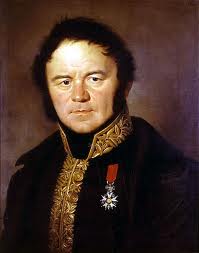
Marie-Henri Beyle, widely known by his pen name Stendhal, was a 19th-century French intellectual, polemicist, and novelist.  He authored De L’Amour (On Love), the classic work on the nature of love.

Image Continue reading

4 Comments

Filed under Culture

A PREFERRED STANDARD FOR LAWYERS

Last week’s unanimous decision of the California Supreme Court to admit to the State Bar Sergio Garcia, an alien residing in the United States unlawfully, was not a surprise.  The decision issued on January 2, 2014, the day after Assembly Bill No. 1024 became effective.  That statute, codified as Business and Professions Code section 6064(b), authorized the Court to admit as an attorney at law “an applicant who is not lawfully present in the United States [who] has fulfilled the requirements for admission to practice law . . . .”Image

Sergio Garcia cut a sympathetic figure, and was ideally suited for the role of a party in a test case.  He did not sneak across the border; rather, he was brought over by his parents when he was 17 months old.  His father eventually attained citizenship, and Garcia himself has been in line for 19 years, waiting for an immigrant visa to become available.  When it does, it will legalize his presence in the country and provide a basis to adjust his status to lawful permanent resident.  Meanwhile, Garcia has graduated high school, college, and law school.  He passed the California bar exam on his first attempt, then applied for admission to the Bar. The Court noted that the State Bar Committee’s investigation found “that Garcia is a well-respected, hard-working, tax-paying individual who has assisted many others and whose application is supported by many members of the community, by past teachers, and by those for whom he has worked.”  In his application, Garcia candidly indicated that he was not a U.S. citizen, and that his immigration status was “pending.”

In many ways, the case represented an internal affairs matter for the California legal profession.  The California Supreme Court has final say over who can and who cannot practice law in the state.  But while the Court’s ultimate conclusion was not surprising, what was surprising was that not a single lawyer sitting on the bench, nor a single lawyer appearing before it, took any notice of the fact that Garcia was receiving very different treatment than other enterprising businessmen.  No one commented on the uncomfortable fact that this proceeding, conducted by lawyers before lawyers, established a preferred status for lawyers under the immigration laws. Continue reading

5 Comments

Filed under Law

IT IS TIME TO RELEASE JONATHAN POLLARD

In November 1985, a short, bespectacled Navy civilian researcher, with a history of erratic behavior and drug use, was stopped by FBI agents on his way home from work.  Allowed to call his wife, he uttered the word “cactus.”  After the call, his wife removed a suitcase from their apartment and called some Israeli acquaintances.Pollard

The researcher was Jonathan Pollard.  The Israelis were his handlers.  The suitcase was filled with intelligence materials, which Pollard had surreptitiously removed from his office.  The materials represented a small portion of the paper pile Pollard had stolen and provided to the Israelis over the previous 18 months.  In total, the purloined documents could fill a space 10 feet by 6 feet by 6 feet – almost as large as the prison cell Pollard was destined to occupy for the next 28 years.

Continue reading

4 Comments

Filed under Law

WHERE ARE THE MANDELA’S?

Next week, three U.S. Presidents and 26 members of Congress will join over 60 world leaders, to attend the funeral of Nelson Mandela in Johannesburg.  This is a remarkable outpouring of global respect for a man who led a small country (South Africa’s population was 35 million when Mandela was elected to lead it) for a short time (Mandela served one four-year term as President, then retired).  It demonstrates the power of the moral life to inspire, a life which, in Mandela’s case, evidenced determination in the face of oppression, dignity in confinement, and forgiveness and reconciliation in victory.

Since his death, many commentators have cited Mandela as an exemplar of Thomas Carlyle’s theory of the “Great Man.”  Carlyle, a nineteenth century Scottish writer, maintained that human progress is powered by the actions of a few heroic figures.  “The history of the world is but the biography of great men,” he wrote.  Carlyle’s heroic view has always been controversial. His contemporary, Herbert Spencer, deemed it childish and primitive.  Spencer saw history as the product of larger, impersonal social and economic forces.  These forces made the so-called Great Men more than the Great Men made history.  “Before he can remake his society,” Spencer wrote of Carlyle’s hero, “his society must make him.”MANDELA

The social system into which Mandela was born was a retrograde and odious system of racial separation.  He spent most of his life fighting it, and when he had won, he forgave his oppressors and tried to work with them in building a new social system.  It is hard to find precedents for the magnanimous course he followed after release from his 27-year imprisonment in 1990.  Perhaps Abraham Lincoln, with his reconciliation plans for the defeated Confederacy, would have furnished an example, had he lived.


Continue reading

1 Comment

Filed under Culture

ZOMBIES: ARE THEY GOOD FOR THE JEWS?

Readers of a certain vintage raised in Jewish homes will recognize the question posed by the title as the ultimate arbiter on issues of the day.  Is Sammy Davis Jr. good for the Jews?  Absolutely, I’m kvelling.  Is Eisenhower good for the Jews?  Not so much.  Even today, the expression survives.  The Wall Street Journal recently published a column assuring its readers that the new Pope Francis would be “good for the Jews.”

Now Brad Pitt’s summer movie spectacular, World War Z, has the world wondering: are zombies good for the Jews?

"Next year in Jerusalem!"  zombies pray.

“Next year in Jerusalem!” zombies pray.

Continue reading

5 Comments

Filed under Culture